China Best Pressure Cooker Replacement Parts Supplier?

Finding the best pressure cooker replacement parts supplier in China takes more than comparing unit prices. Buyers need parts that match the cooker’s model, dimensions, and intended use. A lid gasket may look correct in a photograph, yet differ in thickness or fit. A pressure valve requires even more careful checking. Small mismatches can affect performance and create avoidable safety concerns.

Pressure-cooking educator Laura Pazzaglia’s published guidance offers a useful reminder: follow the cooker’s specific instructions and safety recommendations. That principle matters when sourcing replacement components, too. Ask suppliers for model compatibility lists, material specifications, clear product photos, and inspection records. Confirm whether samples are available before placing a larger order. Keep the cooker’s brand and model number nearby during every discussion. It sounds basic. It is easy to overlook.

This guide examines how to assess a China-based pressure cooker replacement supplier, from product range and quality controls to communication and shipping reliability. It also considers seals, handles, valves, and other commonly requested parts without treating them as universally interchangeable. A responsive sales contact is helpful, but documentation matters more. A polished catalogue can still leave important questions unanswered. That is worth admitting.

Use the following sections to compare suppliers carefully, verify details, and identify gaps before committing. The right partner should explain what each part fits and provide consistent, checkable information. If a supplier cannot confirm compatibility, pause and ask for clarification. For pressure-related components, guessing is not a sourcing strategy.
China Best Pressure Cooker Replacement Parts Supplier?

Understanding the Pressure Cooker Replacement Parts Market in China

China’s pressure-cooker replacement-parts market draws on a deep appliance manufacturing base, but public statistics rarely isolate this segment. China’s Ministry of Industry and Information Technology reported RMB 1.84 trillion in revenue for the wider home-appliance industry in 2023. That figure is useful context, not a measurement of parts sales. It does not prove demand for every gasket, valve, or handle. Keep that distinction clear.

For buyers, dependable sourcing starts with fit and traceability. Check lid diameter, locking geometry, valve dimensions, and gasket material against the intended cooker model. A gasket may look right yet leak after repeated heating. Ask suppliers for material specifications, inspection records, sample testing, and clear defect-handling terms. Small details matter. Compare minimum order quantities and lead times, too; a low unit price can hide costly delays or inconsistent batches. Public data on this niche remain limited, so supplier claims deserve verification. Even careful checks cannot remove every risk, and that limitation should be acknowledged when planning stock.

Common Replacement Parts and Their Compatibility Requirements

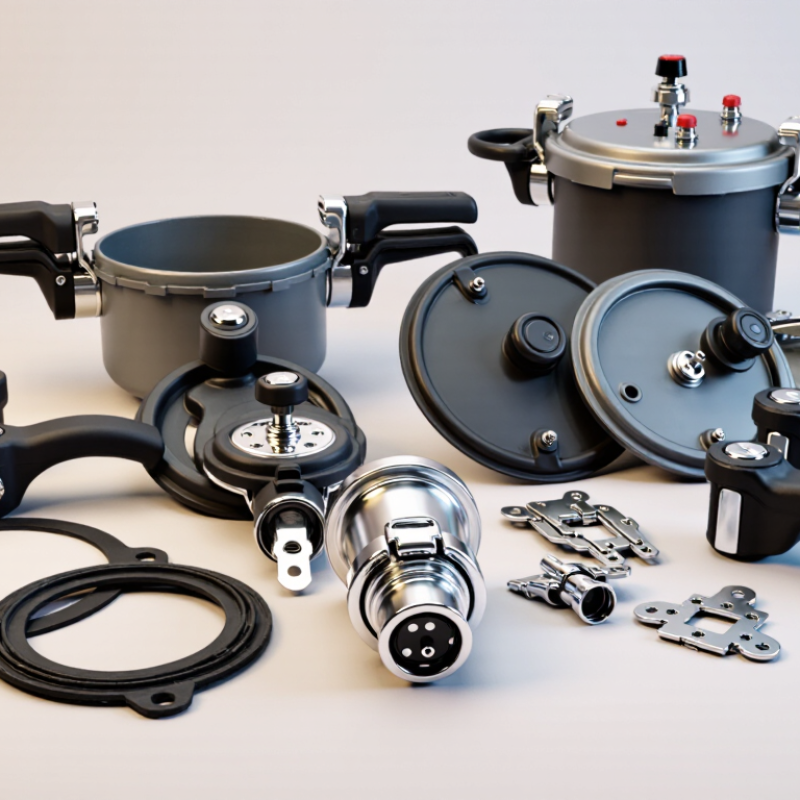
Common replacement parts include silicone sealing rings, pressure regulators, float valves, steam-release valves, and inner pots. Small details matter. A gasket must match the lid’s diameter, cross-section, and groove depth. A ring that looks close may still leak steam or resist closing.

Compatibility starts with the cooker’s exact model number and revision. Check the manual, part number, dimensions, material, and pressure rating before ordering. For electric units, inner-pot shape and capacity matter; heating elements and sensors must match the specified electrical design. Never assume a similar-looking valve is interchangeable. I still find this easy to overlook: wear marks can make an old part look different from a new one.

Suppliers should provide clear fitment tables, material specifications, and traceable inspection records. Ask how parts are checked for sealing and pressure-control performance. The NFPA’s Home Cooking Fires report found an average of 158,400 reported U.S. home structure fires involving cooking equipment annually from 2017 to 2021. This figure does not identify replacement parts as a cause, but it underscores why fit and function deserve careful verification. A cheap seal is not a good bargain if its dimensions are uncertain.

Pressure Cooker Replacement Parts: Compatibility Checks

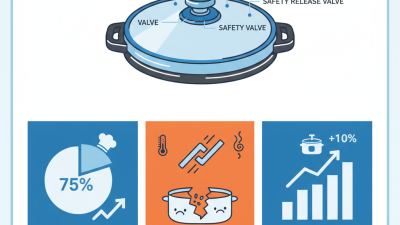
Bars show the number of specifications to verify in this guide—not sales figures or market data. Check the cooker’s model and manufacturer instructions before replacing a part. For safety-critical components, confirm the specified fit and pressure rating; appearance alone does not establish compatibility.

Key Criteria for Evaluating Chinese Parts Suppliers

A dependable pressure cooker parts supplier should show how each component is made and checked. Ask for material specifications, production records, and clear part drawings. Small details matter. A sealing ring may look correct yet vary in thickness, while a valve’s opening can depend on tight dimensional control. Request samples and compare them with the original part before approving a large order.

Quality checks should match the part’s function. For seals, ask about heat resistance, compression recovery, and material consistency. For valves and handles, request inspection records and relevant pressure or temperature test results. Check whether the supplier can explain its test method, not just provide a pass label. Compatibility claims deserve scrutiny. Similar-looking models may use different dimensions, so confirm measurements and intended applications in writing.

Communication is another useful measure. A capable supplier should answer technical questions directly, flag drawing conflicts, and report changes to materials or processes. Ask how batches are identified and how defects are handled. Price still matters, but it can distract from fit and traceability. I would not treat a polished catalogue as proof of stable production; even a careful review can miss a detail. Keep the first order small, inspect the parts, and document what needs improvement before scaling up.

How to Verify Supplier Quality, Safety, and Certifications

A pressure cooker replacement part must fit correctly and withstand repeated heat and pressure. Ask the supplier for drawings, material specifications, and lot-level traceability. Check critical dimensions, such as gasket diameter and valve seating height, against the cooker model. Small mismatches matter.

Request current test reports for pressure-related components and food-contact materials. Confirm that reports identify the exact part, material, and manufacturing site, not just a product category. Verify certificates with the issuing organization, and check their scope and expiry dates. A certificate alone does not prove every shipment is consistent.

Inspect samples from more than one production lot when possible. Look for clean edges, uniform seals, and clear batch markings; keep records of what you receive. Ask how the supplier handles failed inspections and material changes. Paperwork can look tidy. Parts still vary. Independent testing may add cost and time, and even careful checks cannot remove every risk. That is worth acknowledging. Choose suppliers willing to explain limitations and provide evidence, not only confident promises.

China Best Pressure Cooker Replacement Parts Supplier? - How to Verify Supplier Quality, Safety, and Certifications
Verification Dimension Evidence to Request How to Verify Practical Acceptance Check
Part identity and compatibility Part drawings, material specifications, dimensions, model compatibility list, and revision number. Compare the documents with the original part and the pressure cooker’s model and instructions. Confirm that critical dimensions and interfaces are documented. Part number, revision, intended models, and material are consistent across the quotation, drawing, sample, and packaging.
Material traceability Material grade, supplier declaration, batch or lot records, and applicable material test reports. Check that the records identify the actual material used in the quoted part and can be linked to production lots. Request clarification for vague descriptions such as “food-grade rubber.” Material identity and lot traceability are documented; the material is suitable for its intended temperature, pressure, and food-contact conditions.
Food-contact compliance Applicable food-contact declarations and supporting test reports for the specific material and intended use. For the United States, check the relevant requirements for the material and use, such as applicable provisions of 21 CFR. For the European Union, consider Regulation (EC) No 1935/2004 and Regulation (EC) No 2023/2006; Regulation (EU) No 10/2011 applies to plastic materials within its scope. Documents name the material, intended use, test conditions, and applicable regulation. A generic “FDA approved” statement alone is not adequate evidence.
Pressure and functional performance Test plan and reports for the relevant component, such as sealing, valve operation, dimensional inspection, or pressure-related performance. Confirm test methods, sample identification, test conditions, results, and acceptance criteria. Where appropriate, have samples assessed by a competent laboratory or qualified technical reviewer. Results cover the actual part design and intended cooker application; failures, limits, and corrective actions are documented.
Safety-critical features Design specifications and inspection records for pressure regulators, safety valves, locking features, and sealing components, as applicable. Identify which features affect safe pressure control or prevent opening under pressure. Verify that replacement parts match the cooker’s specified design and are not presented as universal without supporting evidence. Safety-related parts have clear compatibility limits and documented inspection or validation. Substitutions are reviewed before production.
Quality management Quality-system certificate, scope, issuing body, certificate number, and validity dates, if claimed. Verify the certificate with the issuing certification body or its official directory. Check that the certified site and scope are relevant to the manufacturing activity. An ISO 9001 certificate can indicate a quality-management system; it is not, by itself, proof that a specific part is safe or compliant.
Certification and regulatory claims Certificates or declarations that identify the product, applicable standard or regulation, issuing organization, and covered production site. Check the certificate’s scope, status, dates, and authenticity with the issuer. Determine whether the claim applies to the complete cooker, a component, or the supplier’s management system. Claims are specific and verifiable. A CE mark is not a general quality certificate and should not be treated as automatic proof that an individual replacement part is compliant.
Production consistency Incoming-material inspection, in-process checks, final inspection records, and control of design or material changes. Ask how the supplier keeps approved samples and specifications aligned with routine production. Review a recent lot record and the change-notification process. Inspection criteria are written, records are lot-linked, and changes to materials, tooling, or design are communicated and approved before implementation.
Sample and shipment control Pre-production sample, approved reference sample, purchase specifications, and packaging or lot-label examples. Compare the production sample with the approved reference and purchase specification. Confirm that packaging identifies the part and its compatible models where needed. Sample, order documents, and shipped goods can be matched by part number and lot or batch information.
Independent verification Laboratory reports, inspection reports, or audit records from a qualified independent provider, when required by risk or market. Confirm the report issuer, report number, tested sample, methods, and date directly with the issuer where possible. Ensure the tested sample represents the current production part. Reports are relevant, complete, and traceable; a laboratory logo or undated report without identifiable samples is insufficient.
Supplier decision record Completed checklist covering compatibility, materials, testing, traceability, quality controls, and applicable market requirements. Record evidence reviewed, unresolved questions, responsible reviewer, and approval date. Set acceptance criteria before placing a production order. Approve only when critical safety and compliance evidence is adequate for the intended part and destination market; document any conditions or exclusions.
Important scope note Requirements vary by part type, cooker design, and destination market. A gasket, handle, regulator, and safety valve do not necessarily require the same tests or documentation. Confirm requirements with the product owner and relevant regulatory or testing professionals before sale or use.

Steps for Sourcing and Ordering Replacement Parts from China

Sourcing pressure cooker replacement parts from China starts with a precise part description. Record the cooker’s model, part number, dimensions, material, and intended function. Add clear photos beside a ruler, especially for seals, handles, valves, and locking components. Details matter. Parts that look alike may differ in thickness or fit. For safety-critical components, request documented material specifications and relevant quality inspection records. Do not rely on appearance alone.

Contact several suppliers with the same drawings and quantity request. Ask about minimum order quantities, sample fees, production lead time, packaging, and shipping terms. Request a sample before placing a larger order, then compare its measurements and finish with the original part. Ask how the supplier checks dimensions and records defects. A confident reply is useful, but supporting documents are better. Not always easy.

Before confirming, agree in writing on the part specifications, accepted sample, quantity, delivery schedule, and process for handling defective items. Keep the approved drawing and sample reference with your purchase records. This process is not perfectly tidy; a sample may reveal a mismatch that requires revised drawings or another production check. Build time for that possibility into the schedule, and avoid ordering critical parts based only on a low quotation.