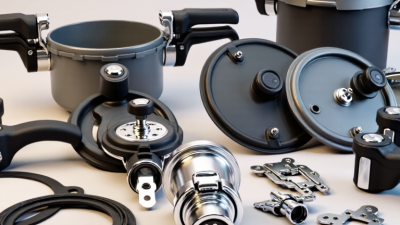
Pressure cooking is moving from a niche kitchen method toward a mainstream global appliance category. Grand View Research and Fortune Business Insights both report steady growth in the pressure cooker market, supported by rising household incomes, compact kitchens, and demand for faster meal preparation. Their forecasts differ slightly, but the direction is consistent: replacement parts will matter more as product ownership expands.
For importers, distributors, and repair specialists, pressure cooker top parts are not minor accessories. They control sealing, pressure release, user handling, and long-term reliability. A silicone gasket should remain flexible after repeated heating cycles. A safety valve must respond predictably. A lid handle needs firm fastening, even when the cooker is moved with wet hands. Small defects can create returns, delays, and serious safety concerns.
This guide compares the most important top components for global buyers. It considers material quality, dimensional compatibility, packaging, traceability, and supplier inspection practices. Common materials include food-contact silicone, stainless steel, heat-resistant polymers, and reinforced aluminum alloys. Buyers should request test records and confirm applicable requirements in the destination market. Relevant references may include FDA food-contact provisions, EU Regulation (EC) No. 1935/2004, and quality systems aligned with ISO 9001.
Appearance is not enough.
A bright valve may still perform poorly. A clean gasket may have the wrong hardness. In practice, measurements, samples, and batch records provide stronger evidence than catalog photographs. Requirements also vary across cooker designs, which makes universal compatibility an unsafe assumption. This overview offers a practical starting point, while reminding buyers to verify every critical detail before purchase.
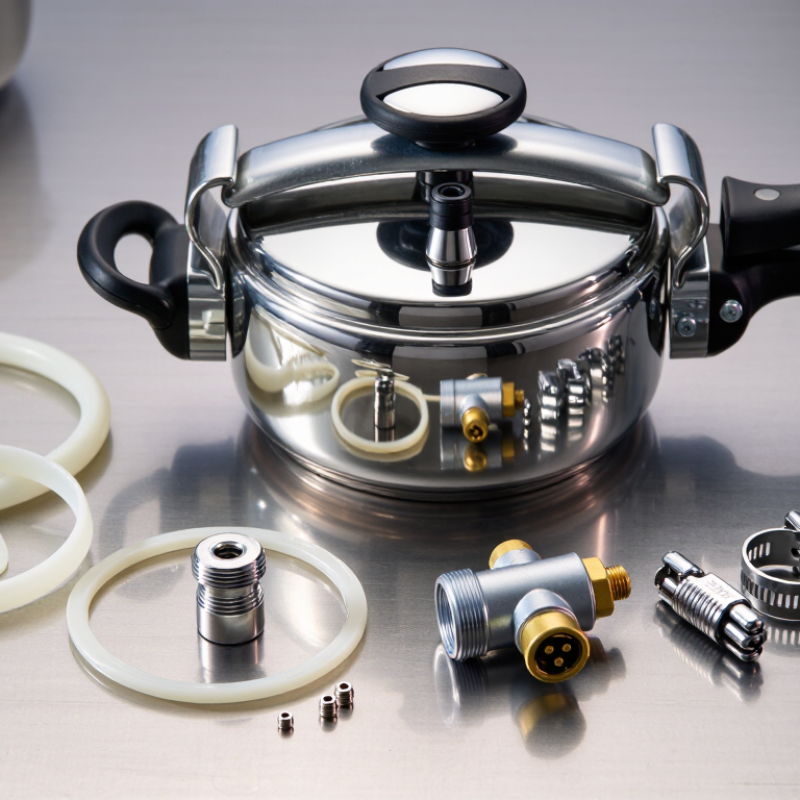
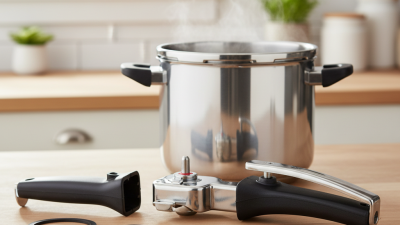
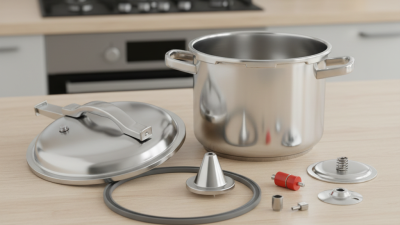
A pressure cooker’s safety depends on five connected parts: the lid lock, sealing ring, pressure regulator, backup release valve, and cooking body with its base. Each part manages pressure differently. The lid lock prevents opening while internal pressure remains high. A correctly fitted sealing ring keeps steam inside, but it must stay flexible and free from cuts. The pressure regulator controls the working pressure through measured steam release. The backup valve provides another escape route if the main regulator becomes blocked. The pot body and base must resist heat, pressure, and uneven contact with the stove.
The risks are practical, not theoretical. NFPA’s Home Cooking Fires report estimates 158,400 home cooking fires annually in the United States from 2017 to 2021, with 470 civilian deaths and 3,000 injuries each year. That report covers all cooking equipment, not pressure cookers alone. Still, it shows why pressure control matters. Buyers should inspect valve openings under bright light, check the locking indicator, and replace a flattened gasket. Never force the lid.
Small details matter.
During product evaluation, I look for clear pressure markings, stable handles, and a base that sits flat without rocking. ISO 4126-1 provides principles for safety valve performance, but household users still need readable instructions and visible warning indicators. Some designs appear secure yet remain difficult to clean around the valve. That is an overlooked weakness. Global buyers should verify material specifications, pressure ratings, spare-part availability, and conformity documents for their target market. A cooker with five safety parts is not automatically safe; each part must work together under heat, steam, and human error.
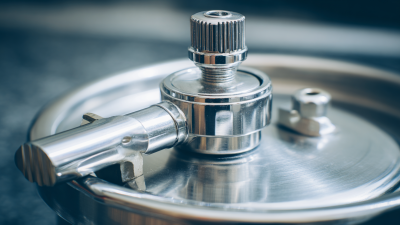
A pressure cooker’s main regulator valve controls the working pressure, not merely the cooking speed. At 15 psi, internal pressure reaches about 121°C, or 250°F. The National Center for Home Food Preservation identifies this temperature as a key pressure-canning reference point. Small deviations can change cooking results, especially for dense foods and high-altitude kitchens.
The regulator should lift smoothly and release steam in a controlled rhythm. A harsh hiss may indicate excess pressure, while no movement can suggest blockage or poor calibration. I have found that buyers often inspect the gasket first, although the valve deserves equal attention. It is a small part. It carries a large responsibility.
Look for corrosion-resistant metal, stable seating, and clear pressure markings. ISO 4126-1:2013 provides international guidance for pressure-relief safety devices, including functional reliability and discharge performance. However, a household cooker valve is not automatically compliant because it resembles an industrial relief valve. Product documentation must state testing conditions, pressure tolerance, and replacement intervals.
Altitude also deserves attention. The NCHFP notes that pressure-canning pressure may require adjustment above 1,000 feet, depending on the method and local guidance. A 15 psi label can therefore mislead global buyers if calibration references are unclear. The weak point is often not the number, but the interpretation. Suppliers should provide valve diagrams, pressure-test records, and instructions suited to each target market.
For global buyers, lid sealing is a small component with major safety consequences. IMARC Group reported that the global pressure cooker market reached about USD 5.2 billion in 2023. That growth increases the need for traceable gasket materials and repeatable testing.
Silicone gaskets should remain elastic after repeated heating and cooling cycles. A practical inspection checks for flattening, cracks, sticky surfaces, or a loose fit. The lid should close smoothly. Not perfectly every time.
A lock indicator must show pressure status clearly, even with wet hands or poor kitchen lighting. Buyers should request material specifications, temperature ratings, and replacement guidance from suppliers.
EN 12778 testing examines essential safety and performance requirements for domestic pressure cookers. Relevant checks include pressure control, lid locking, sealing behavior, and resistance to unsafe opening. Testing should cover production samples, not only a polished prototype.
Intertek’s global product quality reports repeatedly identify inconsistent manufacturing as a major supply-chain risk. That matters here: a gasket may pass laboratory testing but fail after uneven molding or incorrect storage. Buyers should review test reports, batch records, and sample results before approving large orders. A small sealing gap can become visible only after several cooking cycles.
Pressure cooker safety depends on more than the main pressure regulator. A backup valve provides a second release path when the primary valve becomes blocked. It should move freely, resist food particles, and remain accessible during cleaning. Small details matter. A narrow vent can collect starch, grease, or dried sauce.
For global buyers, UL 136 requirements should guide design reviews and supplier documents. Confirm the current edition, applicable product category, and certification scope with an accredited testing laboratory. Testing may examine pressure control, abnormal operation, lid locking, vent blockage, material strength, and insulation. Do not treat a certificate as permanent proof. Components, factories, and drawings can change after approval.
During sample inspection, check whether the backup valve activates at a controlled pressure. Inspect its seal, spring, mounting area, and reset behavior. The valve must not eject dangerously under sudden pressure. Clear markings and usable instructions are equally important. Some manuals remain technically correct but poorly translated. That weakness can confuse users across markets. Packaging should protect valves from impact and contamination before installation.
One imperfect assumption deserves attention: adding a second valve does not automatically create full protection. The pressure vessel, lid, gasket, regulator, and manufacturing controls must work together. Keep test records, lot numbers, material declarations, and change approvals. Local requirements may also apply beyond UL 136, so buyers should request a documented compliance review before production.
When sourcing pressure cooker top parts in 2026, material grade should match heat, steam, and food-contact conditions. Stainless steel 304 suits many lids, handles, and brackets. Grade 316 may offer better resistance where salt, acids, or coastal humidity are common. Silicone gaskets need documented temperature limits, hardness, and food-contact suitability. Do not accept “stainless” as a complete specification. Request the grade, thickness, finish, and batch traceability.
Certification must match the destination market and the part’s function. Ask suppliers for current test reports, declarations, and quality-system records, then verify the issuing laboratory. A pressure-release valve requires more than a material certificate; it needs functional testing at defined pressure and temperature points. For plastic handles, check migration data, flame behavior where relevant, and mechanical-load results. Documents can look official. Dates and model numbers still matter.
Replacement-part fit is often the hidden cost. Compare lid diameter, valve stem length, thread pitch, gasket cross-section, mounting holes, and sealing geometry. Confirm compatibility with the cooker’s working pressure, not only its outer dimensions. A sample may fit by hand yet leak after repeated heating cycles. Request dimensional drawings, tolerance ranges, pilot samples, and cycle-test evidence. One imperfect assumption can spoil an entire shipment. Recheck measurements after receiving samples; supplier drawings are useful, but they are not always exact.
| Part | Primary Function | Common Material Grade | Typical Size or Fit Data | Relevant Certification or Regulatory Reference | Buyer Inspection Points | Replacement-Part Fit Requirement |
|---|---|---|---|---|---|---|
| Pressure-cooker lid | Closes the cooking vessel and contains internal pressure. | 304 stainless steel; anodized aluminum alloys may also be used. | Common nominal vessel capacities: 3 L, 4 L, 5 L, 6 L, 7 L and 8 L. Lid diameter and locking geometry are model-specific. | EN 12778 for household pressure cookers; applicable food-contact requirements such as EU Regulation (EC) No. 1935/2004 or U.S. FDA requirements should be confirmed for the destination market. | Check flatness, cracks, burrs, locking marks, pressure-test results and corrosion resistance. Confirm material test report where stainless steel is specified. | Match vessel diameter, locking tabs, handle mounting points, valve openings and safety-device locations; nominal capacity alone is not sufficient. |
| Sealing ring / gasket | Creates the pressure-tight seal between the lid and the pot. | Food-contact silicone rubber, commonly specified for high-temperature applications. | Typical inner diameters are approximately 18–26 cm, but the exact cross-section, groove profile and elasticity must match the lid. | U.S. FDA 21 CFR 177.2600 may apply to repeated-use rubber articles; EU food-contact compliance and German LFGB testing may be requested where applicable. | Inspect for uniform cross-section, compression recovery, odor, surface defects, tearing and permanent deformation after heat aging. | Match inner diameter, outer diameter, cord thickness, groove shape and lid channel. Do not substitute by diameter only. |
| Pressure regulator / weight | Controls or limits operating pressure by regulating steam release. | 304 stainless steel, heat-resistant polymer, or a combination of metal and polymer components. | Pressure settings are design-specific. Household cookers commonly operate around 50–80 kPa gauge pressure, depending on the model and standard. | The complete pressure-control system should be evaluated under EN 12778 or the applicable national safety standard. | Verify calibrated opening pressure, stable reseating, unobstructed steam passages, corrosion resistance and heat-aging performance. | Match the regulator stem diameter, stem length, mounting thread or slot, vent path and specified operating pressure. |
| Steam-release valve | Provides controlled manual or automatic steam release. | 304 stainless steel; silicone or high-temperature engineering polymer seals. | Valve stems and ports are often approximately 4–8 mm in diameter, but dimensions vary substantially by design. | Pressure-safety performance should be verified with the complete cooker assembly under the applicable local standard. | Check smooth operation, leak tightness, port diameter, seal compression and resistance to blockage by food residue. | Match valve bore, stem length, retaining nut, washer stack, seal dimensions and lid-hole diameter. |
| Float valve / pressure indicator | Indicates internal pressure and may prevent lid opening while pressure remains. | Stainless steel pin with silicone sealing washer or food-contact polymer float. | Common pin diameters are approximately 3–6 mm; lift height and sealing geometry are model-specific. | Safety interlock functionality should be assessed under EN 12778 or the relevant national pressure-cooker requirement. | Confirm clear movement, correct lift height, automatic depressurization behavior and leak-free sealing at the washer. | Match pin diameter, pin length, washer thickness, retaining clip and lid-hole position. |
| Safety relief plug or overpressure device | Provides a secondary pressure-relief path if the primary regulator becomes obstructed. | Food-contact silicone, heat-resistant elastomer and stainless steel retaining components. | Opening pressure and geometry are safety-critical and must be specified by the cooker design authority. | Require safety validation as part of the complete pressure-cooker assembly; do not rely solely on a material certificate. | Verify release behavior, seal integrity, material traceability, heat aging and resistance to accidental blockage. | Use only the specified relief-device dimensions and pressure rating. A visually similar part may be unsafe. |
| Lid handle and auxiliary handle | Allows safe handling and may incorporate the locking mechanism. | Heat-resistant polypropylene, phenolic resin or glass-filled engineering polymer with stainless steel fasteners. | Grip lengths commonly range from about 100–220 mm; hole spacing, offsets and fastener sizes are model-specific. | Food-contact status is relevant where the handle can contact food or condensate; thermal and mechanical safety must also be verified. | Inspect load-bearing strength, heat deformation, fastener torque, sharp edges and locking alignment after repeated cycling. | Match mounting-hole spacing, screw size, handle offset, lid-lock interface and clearance from the cooker body. |
| Cooking pot / inner vessel | Contains food, liquid and pressure during cooking. | 304 stainless steel; aluminum alloy bodies may use a stainless-steel induction plate. | Common capacities: 3–8 L. A nominal 6 L vessel typically has an internal diameter near 22 cm, subject to design variation. | Food-contact compliance may include EU Regulation (EC) No. 1935/2004, relevant national rules and migration testing where required. | Check wall thickness, weld quality, flatness, dimensional stability, coating adhesion if coated and resistance to pitting corrosion. | Match outer diameter, rim profile, base diameter, usable depth, lid interface and heating-surface compatibility. |
| Anti-block shield / filter | Helps prevent food particles from blocking the steam outlet. | 304 stainless steel perforated sheet or food-contact heat-resistant polymer. | Perforation diameter and shield clearance are design-specific; the part must not restrict the designed steam flow. | Material should satisfy applicable food-contact and temperature-resistance requirements for the destination market. | Check hole size, open-area consistency, burrs, corrosion, secure attachment and cleanability. | Match mounting clip, outlet position, clearance from the valve and the original airflow/open-area design. |
| Lid-locking mechanism | Prevents opening when the cooker is pressurized and confirms correct closure. | 304 stainless steel or hardened steel for load-bearing parts; engineering polymer for guides or covers. | Locking travel, engagement depth and handle alignment are specific to each lid and vessel design. | Safety interlock and mechanical-strength testing should follow EN 12778 or the applicable national standard. | Verify full engagement, resistance to deformation, smooth release after depressurization and secure retention under load. | Match locking-tab geometry, handle cam, spring position, engagement depth and lid-to-pot alignment. |