What Is a Wooden Maze Puzzle?
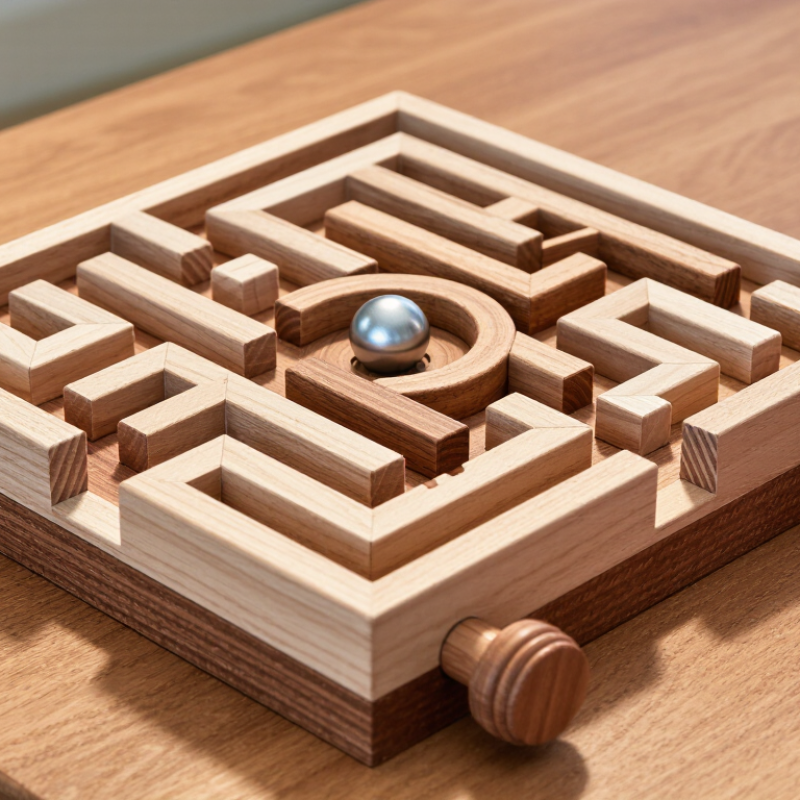
A wooden maze puzzle is a hands-on game built around a simple challenge: guide a small ball through a path without letting it fall into a hole. Many designs use a wooden board, raised walls, and one or two knobs that tilt the surface. The ball rolls slowly. Every movement matters. Some puzzles are flat and compact, while others add ramps, bridges, or multiple levels. Their appearance can be just as appealing as their gameplay, with visible wood grain and carefully cut pathways.
For shoppers searching “Maze Wooden,” the phrase usually points to wooden maze games in several sizes and styles. A tabletop model may suit quiet play at home, while a handheld version can travel in a bag. The right choice depends on the player’s age, patience, and coordination, not just the maze’s difficulty. Check that the ball moves freely, the controls feel secure, and the edges are smooth. Product materials and finishes can vary, so read the maker’s guidance, especially when choosing a puzzle for a young child. Small parts need attention.
These puzzles can encourage steady hand movements, visual tracking, and problem-solving through practice. They do not guarantee measurable developmental gains, and a tricky route may frustrate rather than delight. That is part of the experience. A missed turn can invite another attempt, but the best puzzle still feels fair. Understanding its parts, variations, and practical features makes it easier to choose a wooden maze that people will actually enjoy using.
Definition and Core Features of a Wooden Maze Puzzle
What Is a Wooden Maze Puzzle?
Definition and Core Features of a Wooden Maze Puzzle
A wooden maze puzzle is a hand-operated game in which a player guides a small ball through a carved or printed path. The player tilts the board, steering the ball around walls, dead ends, and narrow turns toward a target. Unlike a flat paper maze, it adds physical movement and tactile feedback. Small, but absorbing.
Core features include a rigid wooden board, a visible route, raised barriers, and a moving piece such as a steel ball. Some designs use knobs or sliders instead of tilting. The puzzle’s difficulty depends on path length, obstacle placement, and how precisely the player must control movement. A smooth finish matters: rough edges or an uneven surface can affect both handling and durability. In practice, the ball can slip away quickly, which is part of the challenge—but may frustrate younger players.
Market figures offer context, not a measure of maze-puzzle sales specifically. Grand View Research valued the global toys market at about $108.7 billion in 2023 and projected 4.6% annual growth from 2024 to 2030. Circana reported U.S. toy sales of $28.3 billion in 2023, down 8% from 2022. These broad figures show the scale of the toy sector; they do not establish demand for wooden maze puzzles. A careful buyer should still inspect the path, finish, and age guidance rather than assume all wooden designs offer the same play experience.
Common Materials and Construction Methods
A wooden maze puzzle usually has a flat base, raised walls, and a small ball or bead that travels through carved paths. Solid woods such as maple or beech can make sturdy walls and bases, while plywood offers a stable, layered panel. Some puzzles use medium-density fiberboard for a smooth, consistent surface. Each material feels different. Wood moves slightly with changes in humidity, so well-fitted parts matter.
Makers can cut channels directly into a board with hand tools or a router, then sand the edges to reduce snags. Another method attaches thin wooden strips to a base, forming the maze walls. Glue holds the joints; small pins or screws may add support. The paths need enough clearance for the ball, but excessive space can make movement feel imprecise. Small details matter. A smooth, sealed finish helps limit splinters and makes the surface easier to wipe. It should not hide rough joints or uneven cuts. Honestly, even a carefully made maze may have one tight corner; testing it with the intended ball can reveal that flaw before the puzzle is finished.
What Is a Wooden Maze Puzzle? — Common Materials and Construction Methods
Wooden maze puzzles are typically made by cutting maze paths into a base or layering shaped pieces beneath a top panel. These bars show representative material densities: lighter woods can make puzzles easier to handle, while denser boards may provide a heavier, more solid feel. Actual density varies with wood species, moisture, and product construction.
How a Wooden Maze Puzzle Works
A wooden maze puzzle is a small route-finding challenge, usually built from a wooden board, narrow channels, and one or more moving pieces. The player tilts the board or guides a bead with a finger, steering it around walls toward a goal. Simple idea. The wood gives the puzzle weight and a tactile feel; you can hear the bead tap the channel edges.
The maze works through controlled movement, not luck alone. Tilt one side gently, watch how the bead responds, then adjust before it reaches a dead end. Some puzzles use a ball that must stay inside grooves; others have sliding blocks or hidden gates. Each design asks you to read the path, predict a turn, and correct small errors. In practice, the board may not sit perfectly level, and a bead can drift faster than expected. That slight inconsistency can frustrate beginners, but it also makes careful handling matter.
Industry demand offers context, though it does not prove that puzzles improve any specific skill. The NPD Group reported that U.S. jigsaw puzzle sales rose 370% in the week ending March 21, 2020, compared with the same week in 2019. A wooden maze is different from a jigsaw, yet both reward patience and repeated attempts. Look closely at the channels: their width, corners, and slopes reveal how much control the puzzle expects from the player.
Main Types and Design Variations
What Is a Wooden Maze Puzzle? Main Types and Design Variations
A wooden maze puzzle guides a ball through channels cut or raised on a wooden board. Players tilt the board, turn knobs, or move pieces to reach an exit without dropping the ball into a hole. The goal is simple. Not always easy. Some designs use a flat surface with branching paths, while others add bridges, ramps, or multiple levels. A beginner’s maze may have wide lanes and few dead ends; a harder one can demand careful, repeated adjustments.
Tips: Check that the ball rolls freely and the edges feel smooth. Start with a simple route, then notice where small tilts send the ball. A little wobble is normal.
Design variations change both the challenge and the way a puzzle feels in the hands. A handheld maze may fit in one palm, while a larger tabletop version gives more room for broad turns. Some boards hide parts of the route beneath a cover, so players must remember the path. Others add numbered checkpoints or several destinations. Carved channels often provide a clear tactile guide, but their depth can affect how easily the ball escapes. There is no perfect difficulty setting: a maze that feels satisfying to one person may feel fussy to another.
Skills Developed Through Maze Puzzle Play
A wooden maze puzzle turns a small board into a hands-on pathfinding challenge. The player tilts it gently, guiding a steel ball around corners and past holes. That simple action asks the eyes and hands to work together. The player must notice where the ball is, then adjust pressure and direction. It takes control. A sudden tilt can send the ball off course, so careful movements matter. Reaching a turn also invites planning: follow the open path, pause, and choose a direction. These repeated choices can support spatial awareness, visual tracking, and fine motor control. Progress may be uneven. That is normal.
Maze play also gives children practice with patience and problem-solving. At a fork, they can compare routes instead of guessing quickly. If a path ends at a dead end, they can retrace their steps and try another approach. This is practical trial and error. Completing a section may build confidence, while a missed turn offers a low-pressure chance to begin again. A caregiver can ask, “What do you notice near that corner?” without taking over the puzzle. Still, one maze cannot teach every skill, and children may enjoy different levels of challenge. It is easy to mistake speed for success; steady attention often matters more. Some days, the ball keeps slipping. The puzzle remains useful practice.