
Why Choose Sunnykinte Umbrella Manufacturer?

Choosing the right umbrella supplier affects product quality, customer trust, and long-term business performance. The Sunnykinte umbrella manufacturer is worth examining because it combines practical production experience with structured quality control. Its work covers compact umbrellas, golf umbrellas, promotional designs, and weather-resistant outdoor models.

Elena Zhou, a Sunnykinte product quality specialist, says, “A reliable umbrella begins with honest material choices and careful testing.” This principle appears in small details. A canopy should open smoothly. The ribs should resist repeated bending. The handle should feel secure, not slippery, after several minutes of use. These details often decide whether a customer reorders.

Sunnykinte umbrella manufacturer also supports customization, including fabric colors, logos, handle styles, and packaging requirements. Experienced buyers can discuss fabric density, frame materials, wind performance, and inspection standards before production begins. Clear communication reduces avoidable errors. It also makes the supply process easier to track.

No supplier is perfect.

That deserves attention. Product performance can vary by design, climate, order quantity, and testing method. Therefore, responsible buyers should request samples, confirm specifications, and review quality records before placing large orders. This practical approach reflects E-E-A-T principles: real manufacturing experience, technical knowledge, accountable processes, and dependable evidence.

This article explores why businesses choose Sunnykinte umbrella manufacturer, while also considering the questions buyers should ask. Quality is not only a factory claim. It is something customers feel when rain starts, wind rises, and the umbrella still works.
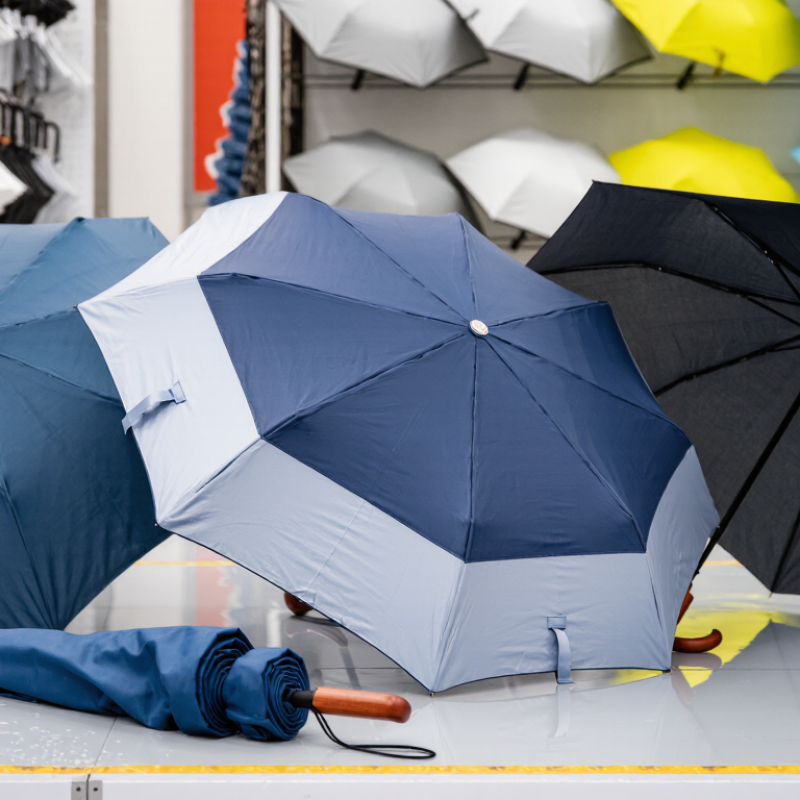
Why Choose Sunnykinte Umbrella Manufacturer?

Company Profile and Core Capabilities of Sunnykinte

A capable umbrella manufacturer needs more than attractive samples. Its company profile should show practical experience, stable production, and traceable quality control. A 2024 global market analysis estimates the umbrella market will grow at over 6% annually through 2030. This growth increases pressure on factories to deliver consistent products, not occasional excellent samples.

The manufacturer’s core capability should begin with product development. Engineers must match canopy fabric, frame strength, handle comfort, and opening performance. Prototypes should be tested under repeated opening cycles and controlled wind conditions. ISO 24454 provides guidance for umbrella performance testing, although real-world weather can be less predictable. That limitation deserves honest attention.

Production control matters at every stage. Incoming fabric checks can identify coating defects before cutting begins. Frame inspections can reduce loose ribs, weak joints, and uneven closing action. A documented inspection plan should cover materials, semi-finished goods, and final packing. In my experience, small details often expose larger process problems. A slightly misaligned runner may reveal rushed assembly or weak operator training. Reliable manufacturers also support custom colors, logo placement, packaging development, and small trial orders. Yet flexibility can create confusion without clear specifications. The company should therefore confirm drawings, tolerances, testing requirements, and delivery schedules in writing.

Why Choose a Professional Umbrella Manufacturer?

Typical product specifications demonstrate how different umbrella categories balance portability, coverage, and structural performance.

Compact umbrellas are designed for everyday portability, while golf and straight umbrellas provide wider coverage. The values shown are representative industry specifications commonly used for product planning and manufacturing.

Umbrella Product Categories and Customization Options

An umbrella manufacturer is easier to evaluate when its product range matches real usage. Everyday commuters often need compact folding umbrellas that fit beside a laptop. Full-length straight umbrellas offer stronger handling in wind and quick opening. Golf umbrellas cover two people and a bag, while beach models use wider canopies. Children’s umbrellas can use rounded tips, bright colors, and lighter frames. Transparent canopies also help pedestrians see traffic at crossings.

Customization should extend beyond a printed logo. Buyers can select canopy fabric, shaft length, handle shape, ribs, closure, and packaging. Recycled polyester may support a lower-impact program, but its performance still needs testing. Screen printing suits simple artwork, while transfer or digital printing handles detailed patterns. Color samples matter because screen images rarely show fabric appearance accurately. Experienced teams inspect stitching, opening action, rib alignment, and water resistance before shipment. Wind testing is useful, although no umbrella should be described as storm-proof.

A dependable supplier records sample approvals, material specifications, and inspection results. It should explain minimum order quantities, production timing, and replacement procedures clearly. From project experience, small changes can create large effects: a heavier handle changes balance. A narrow sleeve may look elegant but frustrate daily users. That detail is easy to miss. Sometimes the first sample is not the best one. Reviewing it honestly usually produces a more practical umbrella.

Manufacturing Standards, Materials, and Quality Control

A reliable umbrella begins with disciplined manufacturing standards, not attractive packaging. Experienced production teams inspect frame alignment, shaft strength, fabric stitching, and opening performance at every stage. Clear work instructions help workers repeat each process accurately. However, real factories know that small variations can still appear. That is why documented inspections matter.

Material selection affects comfort, durability, and weather performance. Common options include polyester, pongee, fiberglass, aluminum, and steel. Each material requires a different testing method. Fabric checks may include coating adhesion, color consistency, and water resistance. Frame checks often examine bending, joint movement, and repeated opening cycles. Quality inspectors record results with batch numbers and inspection dates. This traceability supports corrective action when a problem appears. One test is never enough.

Tips: Ask for material specifications, inspection records, and sample testing before approving production. Check the handle, ribs, canopy seams, and runner by hand. A smooth opening is useful, but it does not prove long-term durability. Request repeat testing after design changes. Factories can miss details when schedules become tight, so independent review is sometimes valuable. Honest quality control also includes reporting failed samples, not hiding them.

Design, Branding, and Private Label Support

Choosing an umbrella manufacturer involves more than checking fabric samples. A capable partner turns a rough concept into a dependable product. Our development process begins with a clear design brief, including canopy size, frame structure, handle shape, and intended use. We review sketches with practical questions. Will the ribs flex safely in strong wind? Does the handle remain comfortable after repeated opening? Small decisions affect daily experience. Prototype testing exposes weaknesses early. One sample may look excellent yet feel unbalanced in the hand. That is worth correcting.

Private label support should protect a buyer’s identity, not cover a generic item with a logo. We coordinate color matching, woven labels, hangtags, packaging, and carton markings. Artwork is checked for scale, contrast, and placement before production. This prevents a logo from disappearing into a dark canopy or peeling from a curved handle. Consistent records support repeat orders. Material specifications, approved samples, and inspection notes create a traceable reference. Clear communication matters more than impressive promises.

Design changes are normal. They should not become expensive surprises. Our team discusses minimum quantities, lead times, fabric choices, and sampling costs before approval. Quality checks can include seam strength, opening cycles, printing adhesion, and moisture resistance. Results should be documented and shared. Not every first sample succeeds. A handle may need reshaping, or a color may look different under warehouse lighting. Honest feedback improves the next version. With experienced coordination and realistic review, private label umbrellas can feel distinctive, consistent, and ready for the market.

Why Choose Sunnykinte Umbrella Manufacturer? - Design, Branding, and Private Label Support

Support Area Practical Scope Typical Deliverables Recommended Verification
Product Design Selection of canopy shape, frame structure, opening mechanism, handle style, and color direction. Concept drawings, product specifications, color references, and sample revisions. Review dimensions, folding performance, opening and closing operation, and overall appearance.
Material Selection Comparison of polyester, recycled polyester, nylon, metal, fiberglass, and plastic components according to product requirements. Material options, component specifications, construction recommendations, and approved samples. Check fabric composition, frame strength, corrosion resistance, colorfastness, and component consistency.
Logo and Branding Application of logos or artwork to the canopy, strap, sleeve, handle, packaging, or hangtag. Artwork layout, print method recommendation, logo placement guide, and pre-production approval sample. Confirm print clarity, color accuracy, adhesion, wash or rub resistance where applicable, and placement tolerance.
Private Label Development Coordination of customized product details, packaging elements, labels, inserts, and retail presentation. Private-label specification sheet, customized packaging files, labels, inserts, and packing instructions. Check approved artwork, barcode data, mandatory markings, carton details, and packaging dimensions.
Sampling Process Creation of samples before bulk production to confirm design, materials, branding, and construction. Prototype sample, revised sample, pre-production sample, and approved reference sample. Compare samples against the specification sheet for measurements, colors, components, and functional performance.
Functional Testing Evaluation of opening cycles, folding, canopy coverage, water shedding, and resistance to normal handling. Inspection checklist, test records, corrective-action notes, and approval status. Use documented test methods and define acceptance criteria before production begins.
Quality Control Inspection of materials, workmanship, dimensions, appearance, functions, and packing during production. Quality standards, inspection records, defect classification, and final inspection report. Define critical, major, and minor defects and use an agreed sampling or inspection plan.
Packaging Customization Development of sleeves, boxes, polybags, inserts, labels, and export cartons for different sales channels. Packaging artwork, dielines, carton marks, packing layout, and packaging samples. Check product protection, print accuracy, carton strength, dimensions, and shipping marks.
Compliance Documentation Preparation of product information and test documentation required by the target market or sales channel. Material declarations, test reports where applicable, care information, and shipping documents. Confirm requirements with the destination market, importer, retailer, or applicable regulatory authority.
Production and Delivery Coordination Alignment of approved specifications, production quantities, packing requirements, inspection timing, and shipment preparation. Production schedule, order confirmation, packing list, commercial invoice, and shipment updates. Verify quantities, carton counts, approved samples, shipping documents, and final dispatch condition.

Note: Testing, certification, labeling, and documentation requirements vary according to product specifications, destination markets, and sales channels.

Ordering Process, Production Capacity, and Customer Service

Why Choose a Professional Umbrella Manufacturer?

A reliable ordering process begins with a clear product brief. Buyers should confirm canopy size, fabric weight, frame material, handle design, packaging, and delivery terms. A structured supplier normally provides drawings, a physical sample, and a written quotation before production. The sample matters. Small details, such as loose ribs or uneven stitching, often appear before mass production. According to the 2024 Fortune Business Insights report, the global umbrella market was valued at approximately USD 7.6 billion in 2023. This scale makes documented quality control increasingly important.

Production capacity should mean more than a large factory floor. Ask for monthly output, available sewing lines, peak-season limits, and recent inspection records. A practical capacity figure is more useful than an impressive maximum. The International Trade Centre highlights supply-chain transparency as a key factor in reliable international sourcing. For umbrellas, this includes incoming fabric checks, frame testing, water-repellent testing, and final carton inspections. A few random tests cannot replace consistent records.

Customer service continues after the purchase order. Buyers need one contact for artwork confirmation, sample changes, production updates, and shipping documents. Photographs from the assembly line can reveal delays before they become expensive. Response time also matters. Still, fast replies do not guarantee good service. A stronger evaluation checks how the supplier handles defects, revised quantities, and missed deadlines. That is where many polished sales promises become less convincing.