
Turf Rakes are specialized maintenance tools designed to remove loose debris, excess thatch, and weak surface material from managed turf. Their teeth comb through the grass canopy, separating organic buildup without cutting deeply into the soil. Some models also level infill on synthetic fields. Others groom sand-based playing surfaces with lighter pressure.
The need for this work is supported by industry research. The Golf Course Superintendents Association of America’s Environmental Profile of Golf Courses identifies water management, soil health, and surface performance as continuing maintenance priorities. The Sports Turf Managers Association also emphasizes consistent surface preparation, drainage, and safe footing in its sports-field management guidance. These reports do not describe one universal rake. Practices vary with turf species, soil texture, traffic, and moisture.
A Turf Rakes operation is simple but not careless. A grounds professional adjusts tine depth, works in one direction, then checks the surface by hand. Dry thatch may lift like a thin brown mat. Wet soil can smear instead. The result depends on timing. Too much pressure can expose crowns, damage runners, or disturb synthetic infill. Too little pressure may leave the problem hidden.
That limitation matters. A rake cannot solve compaction alone. It cannot replace aeration, irrigation control, or mowing discipline. Still, it offers a practical visual check and a precise grooming action. This guide explains rake types, working mechanisms, suitable surfaces, and selection factors. It also questions common assumptions, because “more aggressive” does not always mean “more effective.”
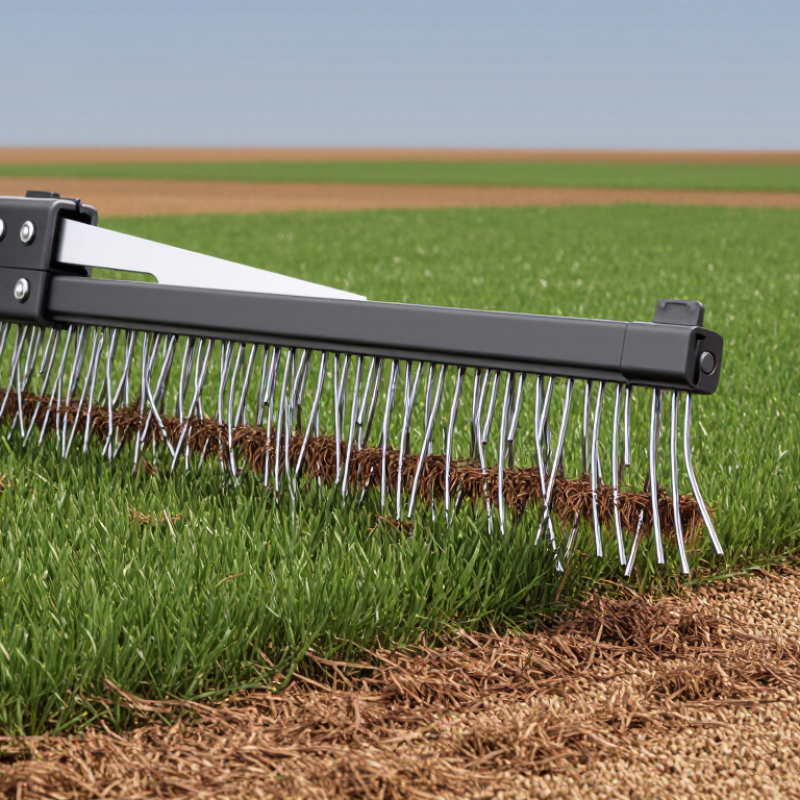
A turf rake is a ground-maintenance tool with rigid or flexible tines. It removes dead grass, loose thatch, moss, and surface debris. Some models also scratch the soil lightly before reseeding. The word “rake” can mislead. This tool does not simply collect leaves.
During use, the tines comb through the turf canopy. They lift tangled organic material while leaving healthy roots in place. Depth matters. A shallow pass cleans the surface. A deeper pass can disturb crowns and expose soil. On sports fields, that difference appears as uneven color, loose footing, or bare strips.
I have used turf rakes after mowing, especially where clippings collect beside goal areas. The tool feels simple, but pressure changes everything. Too much force can tear living stolons. Too little force leaves the thatch untouched. Iowa State University Extension identifies thatch thicker than 0.5 inch as a common reason to consider dethatching. That figure is useful, not absolute.
USGA Green Section guidance also connects excessive thatch with poor water movement and weaker turf performance. A turf rake helps manage that layer, but it is not a cure-all. Soil moisture, grass species, mowing height, and recovery time should guide the work. I still check the removed material by hand. If it contains many white roots, the setting may be too aggressive.
A turf rake removes thatch, moss, and loose debris from grass without stripping healthy soil. Its main working parts are the tines, frame, handle, and depth-control system. Tines may be fixed, spring-loaded, or rotating. Spring tines flex around stones and uneven ground, while rigid tines provide a more aggressive scrape. The frame keeps the tine spacing consistent across each pass.
Handle design affects control and user comfort. A padded, adjustable handle can reduce wrist strain during longer jobs. Powered models usually include a motor, drive housing, and rotating cylinder. The cylinder pulls thatch upward as the tines move through the turf. Some designs use wheels to maintain a steady working height. That detail matters on soft lawns.
Depth adjustment is one of the most important features. Shallow settings lift surface debris, while deeper settings disturb the soil and grass crowns. Experienced operators usually test a small patch first. I once assumed a deeper setting would work faster; it instead left thin, stressed grass. That mistake still influences how I inspect a lawn before raking.
Wet soil, hidden roots, and heavy thatch can change the correct setting. Collection bags are useful, but they may fill quickly when the lawn is neglected. A turf rake works best when its tine type, speed, and depth match the lawn’s condition.
A turf rake is a grooming tool with rotating tines that lift thatch, loose moss, and surface debris. It can be manual or powered. The working process begins with inspection. Check soil moisture, turf height, and thatch depth. Wet ground may tear roots instead of cleaning the surface.
Set the tine depth lightly. The tines should touch the soil surface, not dig deeply. As the rake moves forward, its rotating teeth comb through the grass canopy. They separate dead stems and expose compacted areas. Make one pass in the turf’s normal direction. Then make a lighter cross-pass when debris remains. Remove the lifted material immediately. Heavy residue can block light and air. The USGA Green Section describes thatch management as a balance between removing organic matter and protecting living roots. NTEP turf trials also rate turf quality on a 1-to-9 scale, showing why uniform grooming matters during maintenance checks. A visual improvement is not always recovery.
Tips: Test a small area first. Start shallow. Use slower passes on thin turf. Avoid aggressive raking after drought, frost, or disease pressure. In practice, I have found that dry, flexible turf gives cleaner results. Still, judgment can fail. Some dense turf needs less disturbance than expected. After raking, collect debris, brush seed into exposed gaps, and water only when the soil requires it.
A turf rake uses rotating or spring-loaded tines to comb through the grass canopy, loosen surface thatch, lift dead material, and move it toward the collection area. The chart shows the typical reduction in surface debris across a four-stage raking workflow.
Surface debris values are shown as a practical workflow example in kilograms per 100 square metres. Actual results vary with grass species, moisture, thatch thickness, tine depth, and the number of passes.
Turf rakes are specialized tools for managing thatch, soil, seed, and surface debris. Their design determines how aggressively they work.
A dethatching rake has stiff, narrow tines. It pulls dead grass and moss from the turf surface. This tool suits small lawns and light thatch buildup. Use steady strokes, not forceful scraping. Overworking healthy roots can thin the grass.
A landscape rake has wider teeth and often a leveling edge. It spreads loose soil, removes stones, and smooths uneven areas before seeding.
A leveling lute works gently across topdressing material. Its flat frame fills shallow holes without tearing established turf.
Power rakes use rotating blades for heavier thatch. They are useful on larger lawns, but depth adjustment matters. Too deep, and the machine can expose crowns and damage roots.
Tow-behind turf rakes collect leaves and loosen surface material across broad grounds. They save time, although tight corners still need hand work.
In my experience, dry thatch lifts more cleanly than wet thatch. However, very dry soil can create dust and hide uneven results.
Check the turf after one pass. I sometimes expect a perfect finish too quickly. A second light pass is often safer than one aggressive pass.
Choose the rake according to turf age, thatch thickness, soil condition, and the area’s size.
A turf rake removes thatch, loose moss, and surface debris from grass. Its tines disturb the thatch layer without digging deeply into healthy soil. Choosing the right rake starts with your lawn’s condition. Flexible plastic tines suit light leaf removal and delicate turf. Stronger metal tines work better on compacted thatch, but they need gentler pressure. A comfortable handle and adjustable angle can reduce wrist strain during longer jobs.
Inspect the lawn before raking. Avoid areas with exposed roots, fresh seed, or very dry soil. Wear sturdy shoes, gloves, and eye protection, especially when the rake may catch stones. Rake in one direction using short, controlled pulls. Keep the tines shallow. If soil appears between the grass blades, ease off immediately. That is a warning sign.
Work when the grass is slightly damp, not wet. Wet turf tears easily, while hard, dry ground resists the tines. Clear stones and branches first. They can turn a simple task into a painful surprise. After each few passes, check the collected material and the grass beneath it. Healthy turf should remain rooted and upright. I sometimes find that slower passes produce better results than forceful strokes. It is easy to overdo. Stop if the lawn looks scraped, the roots become visible, or your hands lose control. A small test area can reveal whether the rake is suitable before treating the entire lawn.
| Category | Typical design or specification | How it works | Best use and safety note |
|---|---|---|---|
| Spring-tine turf rake | Flexible metal tines; commonly about 30–50 cm wide | The tines bend over the grass, lifting loose thatch, moss, dead leaves, and surface debris. | Suitable for routine lawn grooming. Use light pressure to avoid pulling out healthy grass. |
| Rigid-tine lawn rake | Straighter, firmer teeth, often made from steel or reinforced plastic | Firm tines collect heavier material and can loosen shallow surface debris more aggressively than flexible tines. | Useful for leaves and garden debris. Avoid forceful scraping on delicate or newly established turf. |
| Dethatching rake | Short, sharp, or blade-like teeth; commonly adjustable for shallow or deeper work | Teeth penetrate the thatch layer and pull out accumulated dead stems, roots, and organic material. | Use only when thatch is excessive. Check the soil and turf condition first because aggressive dethatching can cause injury. |
| Leaf or fan rake | Wide, fan-shaped head with many closely spaced, flexible tines | The broad head sweeps leaves and light debris across the surface while minimizing soil disturbance. | Best for autumn leaves and light cleanup. It is not designed for removing compacted thatch. |
| Adjustable-head rake | Head angle or tine spacing can be changed to suit the task | A wider setting gathers light debris; a narrower or firmer setting concentrates the raking action. | Versatile for mixed conditions. Lock the adjustment securely before use. |
| Head width | About 30–50 cm is common for hand turf rakes | A wider head covers more ground per pass; a narrower head offers better control in beds, borders, and confined areas. | Choose width according to lawn size, storage space, and the operator’s strength. |
| Handle length | Many long-handled rakes are approximately 1.2–1.8 m long | A suitable handle lets the user work upright and maintain a comfortable raking angle. | Select a length that reduces bending without making the tool difficult to control. |
| Turf condition | Healthy, established grass is generally more tolerant than newly seeded or stressed turf | Raking removes surface material but can also disturb crowns, shallow roots, and seedlings if the action is too strong. | Do not rake drought-stressed, waterlogged, frozen, or newly germinated turf aggressively. |
| Recommended technique | Short, controlled strokes with the rake held at a shallow angle | A shallow angle lifts debris while limiting tine penetration into the soil. | Work in one direction, then change direction lightly if needed. Avoid twisting the wrists or using excessive force. |
| Moisture check | Soil should be workable but not saturated | Very wet soil is more prone to smearing and compaction, while very dry soil and grass can be brittle. | Wait until the surface is firm enough to support walking without deep footprints. |
| Personal protective equipment | Work gloves, closed-toe footwear, and eye protection when debris may be thrown | Protective equipment reduces the risk from sharp debris, splinters, dust, and accidental contact with the tines. | Use additional protection if the lawn contains stones, thorny material, or dusty thatch. |
| Inspection and storage | Check for loose heads, bent tines, cracks, rust, and damaged handles | A secure head and intact handle keep the rake predictable and reduce the chance of breakage during use. | Tighten or repair parts before working. Store the rake with tines protected and away from walkways. |