
Global buyers are rethinking the treatment room. A Cosmetic Bed is no longer simple clinic furniture. It supports comfort, hygiene, positioning, and practitioner efficiency. Small design choices matter. A quiet motor, firm padding, and stable height can change a patient’s experience.
Grand View Research estimates that the global medical spa market will expand strongly through 2030, supported by rising demand for minimally invasive aesthetic treatments. The ISAPS Global Survey 2023 recorded approximately 34.9 million surgical and nonsurgical cosmetic procedures worldwide. These figures suggest continuing demand for reliable treatment environments. However, procedure growth does not automatically guarantee better equipment decisions. That assumption deserves careful review.
Dr. Michael H. Gold, a dermatologist and aesthetic medicine specialist, summarizes the purchasing principle clearly: “Patient comfort is part of clinical quality.” Buyers should therefore assess more than upholstery color. They should compare weight capacity, electric adjustment, disinfectant resistance, noise levels, warranty coverage, and replacement-part access. A bed that looks premium may still feel unstable during facial procedures. Another model may be less attractive but easier to clean between clients. The best choice depends on treatment type, room size, staff workflow, and local service support. No single model wins everywhere. That is the uncomfortable truth.
This guide examines the top Cosmetic Bed options for global buyers. It combines market evidence, practical clinic experience, and manufacturer specifications. The aim is not to promote the most expensive bed. It is to identify dependable value, safer operation, and a better patient experience.
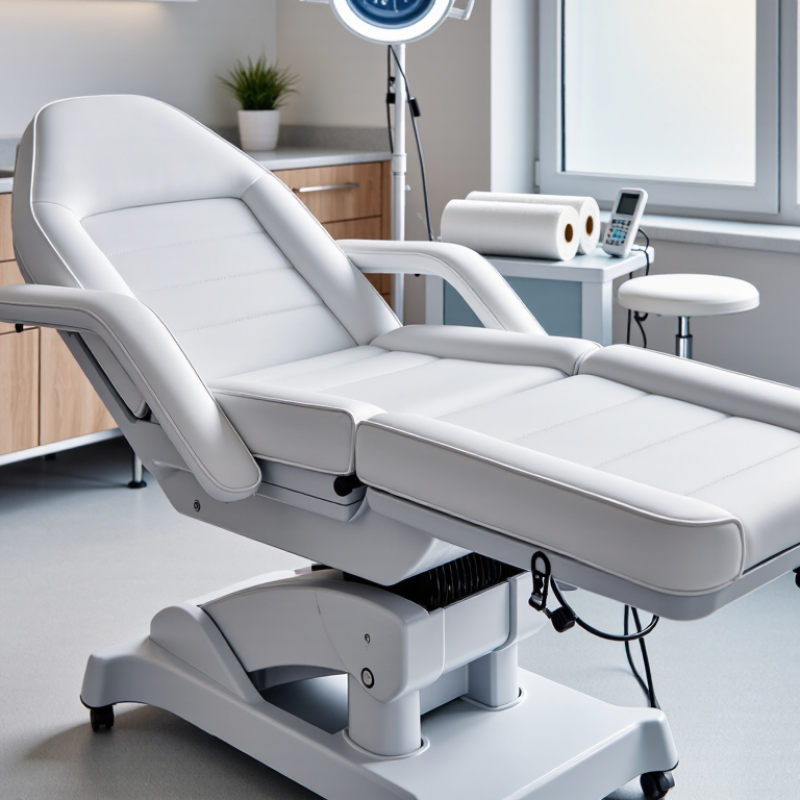
A cosmetic bed is an adjustable treatment platform used during aesthetic and skincare procedures. It usually includes a padded surface, reclining backrest, height adjustment, and a wipe-clean cover. Some models also support leg positioning or removable armrests.
Small details matter. A stable frame helps practitioners work precisely, while smooth electric movement reduces awkward lifting during treatments.
Small details matter.
A stable frame helps practitioners work precisely, while smooth electric movement reduces awkward lifting during treatments.
Dermatologists, licensed aesthetic practitioners, plastic surgery clinics, beauty therapists, and medical spas commonly use cosmetic beds. Their needs differ.
A facial specialist may prioritize a narrow, comfortable surface.
A body-treatment clinic may need stronger weight support and wider positioning options.
ISAPS reported more than 34 million surgical and nonsurgical aesthetic procedures worldwide in its 2023 survey.
Grand View Research also identified continued expansion in the global medical aesthetics market. These figures suggest growing demand for reliable treatment furniture, not simply attractive furniture.
For global buyers, safety documentation, electrical compatibility, cleaning resistance, and after-sales servicing deserve close attention.
A bed can look premium and still perform poorly after repeated daily use. That is an easy mistake.
Buyers should check load ratings, motor noise, emergency lowering functions, and upholstery seams.
Technical specifications often sound convincing, but real clinic experience may reveal uncomfortable head angles or slow adjustments.
Independent testing and clear installation instructions make the purchase more dependable.
Prices alone cannot show long-term value.
What Are the Top Cosmetic Beds for Global Buyers?
Which Cosmetic Bed Types Suit Different Treatment Needs?
A facial treatment bed should support calm, precise work. Electric beds suit clinics offering facials, skincare analysis, and gentle peels. Their backrest and leg sections adjust smoothly with handheld controls. This helps practitioners maintain better posture during long appointments. A well-padded surface also reduces client movement. Small details matter.
For massage, waxing, and body treatments, a wider hydraulic bed can be more practical. Its height changes quickly without requiring a power outlet. This feature helps mobile therapists and smaller studios. Hydraulic models often feel stable during firm pressure. However, some models adjust less quietly than electric versions. That can disturb a relaxed client. Check the lifting range before purchase.
Multifunction cosmetic beds support several services, including facials, lashes, waxing, and light body care. These beds usually include adjustable backrests, leg sections, and removable cushions. They work well for businesses that need flexible room layouts. Portable folding beds are useful for home visits and temporary treatment spaces. Their lighter frames make transport easier, but comfort and stability may suffer. I would not choose portability alone. Buyers should inspect the frame, working weight, upholstery seams, and cleaning resistance. Rounded edges improve safety, while easy-to-disinfect surfaces support reliable daily hygiene. Electrical controls should be tested repeatedly, not just during delivery. A bed can look excellent online and still feel awkward in real use.
| No. | Cosmetic Bed Type | Most Suitable Treatment Needs | Typical Configuration and Data | Main Advantages | Key Purchasing Considerations | Overall Suitability |
|---|---|---|---|---|---|---|
| 1 | Three-Motor Electric Cosmetic Bed | Facial treatments, skincare procedures, waxing, eyelash services, light massage, and multi-service beauty clinics. | Independent adjustment of backrest, leg section, and overall height; typical height range of approximately 60–85 cm; typical working load of approximately 150–200 kg. | Good balance of versatility, operator ergonomics, patient comfort, and smooth positioning. Suitable for clinics that perform several treatment categories on one bed. | Requires a nearby power supply and regular inspection of motors, hand controls, and electrical components. A wider frame may be preferable for extended treatments. | Excellent for multi-service clinics |
| 2 | Four-Motor Electric Treatment Bed | Advanced facials, non-invasive aesthetic procedures, body treatments, injectables, and treatments requiring precise positioning. | Usually provides independent control of height, backrest, leg section, and tilt or central inclination; typical working load of approximately 150–220 kg. | Offers a broad range of clinical positions and precise adjustment for both practitioner access and client comfort. Useful when treatment protocols vary considerably. | Higher purchase cost, greater weight, and more components to maintain. Buyers should verify emergency lowering, electrical standards, and service availability. | Excellent for advanced aesthetic centers |
| 3 | Hydraulic Cosmetic Bed | Facial care, waxing, massage, nail and beauty services, and facilities where electrical access is limited. | Hydraulic foot-pump height adjustment; backrest and leg sections may be manually or mechanically adjusted; typical working load of approximately 135–180 kg. | Does not require an electrical connection for height adjustment, provides stable support, and is often durable for regular salon use. | Height adjustment is generally slower and less precise than powered adjustment. The pump, base clearance, and lock stability should be checked before purchase. | Very good for salons and independent studios |
| 4 | Fixed-Height Facial Bed | Basic facials, cleansing, masks, brow services, eyelash extensions, waxing, and short-duration skincare treatments. | Fixed working height, commonly approximately 65–75 cm; usually includes an adjustable backrest; typical working load of approximately 120–160 kg. | Simple construction, low maintenance, reliable operation, and attractive entry-level cost. It is easy to use in dedicated facial rooms. | A fixed height may not suit every practitioner or treatment. Confirm the bed height against the operator’s working posture and the room’s available space. | Very good for focused facial services |
| 5 | Portable Folding Beauty Bed | Mobile beauty services, home visits, training demonstrations, temporary treatment rooms, and small businesses. | Foldable frame with carrying case; typical working length of approximately 180–195 cm; typical working load of approximately 120–สะ160 kg, depending on construction. | Easy to transport and store, requires no installation, and can be set up in locations where a permanent treatment bed is impractical. | Usually has fewer adjustment options and less lateral stability than a fixed or powered bed. Check packed weight, locking systems, padding thickness, and load rating. | Excellent for mobile treatment providers |
| 6 | Electric Spa and Massage Table | Body massage, spa rituals, body wraps, aromatherapy, relaxation treatments, and wellness services. | Motorized height and backrest adjustment; some configurations include a split leg section or face hole; typical working load of approximately 150–250 kg. | Provides comfortable access for full-body treatments and allows therapists to adjust working height during long sessions. | It may be wider and heavier than a facial bed. Confirm compatibility with massage accessories, drainage or wet-area requirements, and cleaning procedures. | Excellent for spa and wellness facilities |
| 7 | Bariatric or Extra-Wide Treatment Bed | Clinics and salons serving a broad range of body sizes, longer treatments, body contouring, and procedures requiring enhanced stability. | Reinforced frame, wider mattress commonly approximately 75–90 cm, and typical working load of approximately 200–300 kg or more, depending on the tested model. | Improved stability, greater client comfort, and increased inclusivity for treatment providers serving diverse customers. | Requires more floor space and may reduce access for practitioners on both sides. Verify the rated capacity, castor strength, braking system, and doorway clearance. | Excellent for inclusive, high-capacity clinics |
| 8 | Tattoo and Piercing Treatment Bed | Tattooing, piercing, cosmetic tattooing, and procedures requiring stable support and adjustable client positioning. | Reinforced upholstery, adjustable back and leg sections, and typical working load of approximately 150–250 kg; some designs include removable cushions or arm supports. | Stable positioning for detailed work, adaptable access to different body areas, and durable upholstery for frequent disinfection. | Confirm that upholstery seams, cushions, and accessories can withstand approved disinfectants. Positioning range should match the practitioner’s specific procedures. | Very good for tattoo and piercing studios |
For global buyers, a cosmetic bed should do more than look polished. It must support precise, comfortable, and repeatable treatments. A stable steel or reinforced frame reduces movement during waxing, facials, or brow work. The bed should carry its rated load without bending or noisy vibration. Check the working load, not only the product’s appearance. Good design begins with honest specifications.
High-quality beds offer smooth height adjustment and practical back and leg positioning. Electric controls can save a practitioner’s shoulders during long appointments. Manual mechanisms may work well, but locking points must feel firm. Test every joint. A thick, resilient cushion helps clients remain still without creating pressure points. Covered surfaces should resist oils, lotions, and frequent disinfecting. Tight stitching matters around corners where residue collects. Rounded edges also simplify cleaning and reduce accidental contact.
For international purchasing, inspect the power system, plug options, noise level, and maintenance access. Clear manuals, spare-part support, and traceable safety documentation show responsible manufacturing. Materials should be described accurately; “eco” alone proves little. Ask how upholstery performs after repeated cleaning, not just showroom use. No bed is perfect. Some models feel luxurious but lack useful side clearance or stable casters. Others adjust well yet look less refined. Compare treatment needs, room size, operator height, and local safety requirements before choosing.
What Are the Top Cosmetic Beds for Global Buyers?
Global buyers should compare cosmetic beds through safety, comfort, and durability, not appearance alone. A stable frame should resist movement during lifting, reclining, or treatment. Check the working load, locking casters, frame joints, and emergency lowering system. These details matter in busy clinics. They also reduce avoidable risks.
Comfort requires more than thick padding. Inspect the cushion density, surface material, headrest angle, and height range. A client should remain supported without pressure points after a long session. Operators need easy access to controls and enough legroom. During practical product checks, small design flaws often become obvious. A control placed too low can slow treatment. A narrow base may limit movement. Perfect choices are rare.
Tips: Request load-test records, material specifications, warranty terms, and maintenance guidance before purchasing. Ask whether replacement parts are available in your region. Confirm electrical compatibility and local safety requirements with qualified professionals. Examine seams, hinges, and hydraulic components in person when possible. Test the bed with realistic movements, not only an empty showroom display. A softer cushion may feel comfortable initially, but it can lose shape sooner. A very rigid frame may last longer, yet feel less welcoming. Buyers should document these trade-offs and avoid relying on attractive photographs alone.
Global buyers should judge cosmetic beds by safety, serviceability, and shipping practicality. The Global Wellness Institute’s 2024 Global Wellness Economy Monitor valued wellness at about $6.3 trillion in 2023. It projects nearly $9 trillion by 2028. Demand is strong, but attractive design alone is not enough.
Before importing, request the exact product dimensions, packed dimensions, gross weight, and container loading plan. Check the working load with the backrest raised. Ask for test evidence, not only a catalogue claim.
Verify motor voltage, plug type, frequency, fuse protection, and operating noise. Electrical requirements vary by destination.
If the bed includes heating or powered lifting, ask an accredited laboratory which safety standard applies. Do not assume a general certificate covers every component. The EU Safety Gate 2023 report recorded more than 3,400 alerts for dangerous non-food products, showing why traceable compliance matters.
Confirm material cleaning resistance, upholstery composition, replacement parts, warranty terms, and spare-motor availability.
Tips: Compare two quotations using the same Incoterm. Confirm whether insurance covers water damage. Ask for carton photos and drop-test records.
Measure your doorway. A beautiful bed that cannot enter the treatment room is an expensive mistake. Review the supplier’s inspection report, but keep independent pre-shipment inspection when the order is large.
International Trade Centre Trade Map data can also help compare import values, tariffs, and supplier countries. I would still budget for delays, because shipping estimates often look more precise than reality.