
The global market for Chicken Seasoning Cubes reflects a wider shift toward convenient, flavorful, and affordable home cooking. Consumers want quick meals, but they increasingly examine sodium levels, ingredient lists, and product origins. The OECD-FAO Agricultural Outlook 2024–2033 identifies poultry as a major contributor to future meat consumption growth. This trend supports continued demand for chicken-flavored cooking aids across retail, foodservice, and emerging markets.
Convenience matters.
Market research from Grand View Research and IMARC Group describes steady development in the bouillon and stock-cube categories, supported by urbanization, changing household routines, and expanding packaged-food distribution. However, these reports often group seasoning cubes with related products. Direct comparisons can therefore become imperfect. That limitation deserves attention.
This Top 10 Chicken Seasoning Cubes Suppliers Worldwide overview focuses on practical supplier signals rather than popularity alone. It considers manufacturing scale, export reach, formulation consistency, private-label capability, packaging quality, and documented food-safety systems. Reliable suppliers should provide clear allergen declarations, traceable raw materials, and batch-level quality controls. Certifications such as HACCP, ISO 22000, BRCGS, or recognized local equivalents can strengthen buyer confidence, although certification alone does not guarantee product performance.
A cube should dissolve evenly in a hot saucepan, release a balanced chicken profile, and avoid excessive salt masking the flavor. Buyers should also assess lead times, minimum order quantities, sample policies, and regulatory documentation for each destination market. Supplier rankings remain partly subjective. Regional pricing, recipe differences, and incomplete public data may change the final order. Even so, these companies offer useful starting points for importers, distributors, food manufacturers, and professional purchasing teams seeking dependable Chicken Seasoning Cubes.
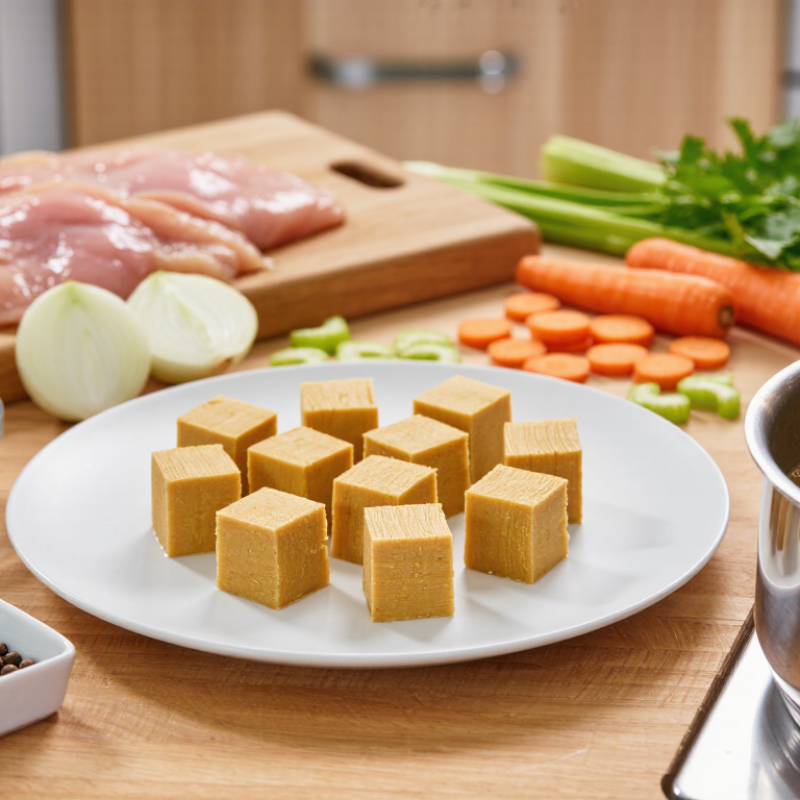
Chicken seasoning cubes are compact, concentrated flavor blocks used in soups, rice, sauces, and marinades. They usually contain dehydrated chicken stock or meat extract, salt, starch, spices, fat, and savory flavoring ingredients. Some formulas include vegetables, herbs, or yeast-based compounds.
Their firm texture comes from controlled drying and pressing. A protective wrapper helps preserve aroma and moisture balance. Add one cube to hot liquid, then stir until it dissolves.
Reliable production begins with traceable raw materials, controlled heating, hygienic equipment, and moisture testing. Suppliers should provide ingredient specifications, allergen information, batch records, and suitable microbiological reports.
Sensory checks matter too. A quality cube should dissolve evenly and deliver a clean, balanced chicken flavor. Still, quality depends on the recipe. A caterer may need rapid dissolution, while a home cook may prefer lower sodium or visible herbs. There is no universal formula.
Worldwide buyers should examine packaging strength, shelf-life data, export documents, and production capacity, not only price. Humid storage can damage texture and aroma. Practical trials often reveal weaknesses faster than catalog descriptions.
Some cubes taste flat after boiling. Others dominate delicate dishes. That is worth reconsidering. Clear labeling, consistent batches, and honest product limitations indicate a dependable supplier. These cubes are convenient, but they cannot replace carefully prepared stock in every dish.
Top 10 Chicken Seasoning Cubes Suppliers Worldwide
How Chicken Seasoning Cubes Are Made
Chicken seasoning cubes begin with carefully selected ingredients, not only chicken flavoring. Manufacturers usually combine dehydrated chicken stock, salt, starch, vegetable fats, yeast extract, spices, and permitted flavor enhancers. The mixture must deliver a strong aroma while remaining stable at room temperature. Small details matter. A coarse powder can weaken compression.
The production line often starts with blending and moisture control. Ingredients are weighed, mixed, and sometimes granulated for better flow. The blend then enters a tablet press, where controlled pressure forms compact cubes. Excessive pressure can slow dissolution in hot water. Insufficient pressure creates fragile cubes during transport. Operators test hardness, moisture, salt distribution, and microbial safety in laboratory samples.
The Grand View Research seasoning and spices market report estimated the sector at about USD 22.8 billion in 2023, with continued growth forecast through 2030. The FAO-OECD Agricultural Outlook 2024–2033 also expects poultry production to expand steadily, supporting demand for chicken-flavored foods. These figures do not guarantee uniform cube quality. Natural stock ingredients can vary between batches. That is where experienced technicians adjust blending time, drying conditions, and compression force. Even well-controlled production is not perfectly predictable. A cube may dissolve quickly in one soup, yet leave slight sediment in another. Packaging must therefore limit humidity, oxygen, and heat exposure from the factory to the kitchen.
When evaluating chicken seasoning cube suppliers, I begin with the specification sheet, not the sales presentation. It should state chicken content, salt level, moisture, additives, allergen controls, and cube weight. A small sample order reveals more than polished photographs. I dissolve each cube in 250 milliliters of hot water. Then I record aroma, color, sediment, and aftertaste. I repeat the test after storage. Results can change.
Reliable suppliers provide batch records, laboratory reports, production dates, and traceability codes. Their food safety systems should be verified through current, recognized certifications and independent audits. The documents must match the physical product. A certificate alone proves little. I ask how the supplier handles ingredient changes, complaints, and product recalls. Clear answers usually indicate stronger operational discipline. Vague replies deserve careful review.
Supply capacity matters as much as flavor. I compare minimum order quantities, lead times, packaging strength, and temperature requirements during shipping. Cartons should arrive dry, sealed, and free from crushed cubes. I also check whether the supplier can maintain consistent seasoning across several batches. Communication speed is useful, but technical accuracy matters more. One supplier answered quickly yet missed basic specification details. That experience changed my evaluation process.
Pricing requires equal caution. A low quotation may exclude testing, custom packaging, or freight adjustments. I request a complete landed-cost estimate and review payment terms carefully. Small pilot orders reduce risk before larger commitments. Even then, no evaluation is perfect. Seasonal ingredient changes and port delays can still disrupt planning.
The chart presents a practical procurement scorecard for comparing global suppliers. Scores are based on the relative importance of food safety, regulatory compliance, product performance, supply reliability, and commercial conditions in international ingredient sourcing.
Evaluation scale: 0–100 points. Higher scores indicate greater importance when qualifying and monitoring suppliers of chicken seasoning cubes.
The global supplier landscape is shaped by poultry demand, convenience cooking, and regional taste preferences. The OECD-FAO Agricultural Outlook 2024-2033 projects continued growth in global poultry consumption, especially in emerging markets. This supports steady demand for chicken seasoning cubes used in soups, rice, noodles, and sauces.
Industry research from Grand View Research identifies convenience foods and processed seasonings as important growth areas, although market estimates differ by research method. Buyers should examine ingredient traceability, production capacity, export experience, and certification records. A cube should dissolve evenly, release a clear chicken aroma, and avoid excessive saltiness.
Buyers should examine ingredient traceability, production capacity, export experience, and certification records.
A strong supplier can provide batch samples, allergen statements, shelf-life data, and manufacturing audits. The Codex Alimentarius standards also encourage hygienic handling and accurate food labeling across international trade.
However, ranking the top ten suppliers is not perfectly simple. Public revenue figures often combine cubes with wider seasoning categories. Some reports also use different regional definitions. That weakness deserves attention.
My practical view is to compare suppliers by verified performance, not promotional claims.
A supplier serving large volumes may still struggle with small custom orders. Another may offer excellent flavor but limited regional logistics. Testing both samples and documents remains essential.
Top 10 Chicken Seasoning Cubes Suppliers Worldwide: How to Choose the Right Supplier for Your Market
Choosing among the top ten chicken seasoning cube suppliers requires more than comparing prices. The OECD-FAO Agricultural Outlook 2024-2033 expects poultry demand to remain strong, especially in developing markets. This creates opportunities, but local tastes differ sharply. A supplier should offer adjustable salt, spice, fat, and flavor profiles. Ask for samples prepared in your actual broth, rice, or noodle recipe. Laboratory performance matters more than an attractive sample packet.
Check manufacturing evidence before signing. Request HACCP or FSSC 22000 certification, recent audit summaries, allergen controls, and batch-level traceability. The World Health Organization recommends fewer than 2,000 milligrams of sodium daily for adults. Therefore, sodium content deserves careful review, particularly for retail products. Do not accept “low sodium” claims without laboratory results and local label compliance. Codex Alimentarius standards can guide ingredient and labeling checks, but national rules still control market entry.
Commercial fit is equally important. Compare minimum order quantities, lead times, packaging durability, shelf life, and currency terms. Euromonitor’s packaged food research repeatedly shows that affordability and convenience influence purchasing decisions, yet premium shoppers also inspect ingredients. A cheaper cube may create higher costs through weak dissolving, broken cartons, or inconsistent batches. I would score each supplier across quality, compliance, logistics, customization, and service. My scorecard may still miss something. A factory visit, when practical, often reveals more than a polished presentation.
An anonymized comparison of supplier profiles, product capabilities, compliance credentials, order flexibility, and market suitability.
| Rank | Supplier Profile | Primary Supply Region | Product Format | Typical Cube Weight | Key Ingredient Options | Common Certifications | Packaging Options | Indicative MOQ | Typical Lead Time | Export Capability | Best Market Fit |
|---|---|---|---|---|---|---|---|---|---|---|---|
| 1 | Supplier Profile A Large-scale food seasoning manufacturer with automated compression and wrapping lines. | Western Europe | Pressed bouillon cubes; granulated and powder alternatives available | 8–10 g | Chicken stock, onion, garlic, turmeric, black pepper, yeast extract | HACCP BRCGS IFS | Foil-wrapped cubes; carton boxes; food-service bulk packs | 1–3 metric tons per SKU | 6–10 weeks | Strong experience with European, Middle Eastern, and African documentation requirements | Retail chains and established importers |
| 2 | Supplier Profile B Flexible private-label producer focused on customized recipes and multilingual packaging. | Southern Europe | Chicken-flavored cubes with standard and reduced-sodium formulations | 10 g | Chicken fat or vegetable fat, herbs, spices, maltodextrin, natural flavors | HACCP ISO 22000 Halal options | Individual wrapping; 10-, 12-, or 24-cube cartons; customized retail artwork | 500 kg–1 metric ton per SKU | 5–8 weeks | Suitable for mixed-language labels and distributor-led export programs | Private-label brands and regional distributors |
| 3 | Supplier Profile C High-volume Asian producer with competitive pricing and broad seasoning raw-material access. | East Asia | Compressed cubes, powder sachets, and granulated seasoning | 4–10 g | Chicken powder, soy sauce powder, ginger, white pepper, scallion, hydrolyzed vegetable protein | HACCP FSSC 22000 Halal | Foil wrap, pillow pouch, laminated sachet, export carton | 2–5 metric tons per SKU | 7–12 weeks | Experienced in container exports and documentation for Asia, Africa, and Latin America | Price-sensitive mass-market products |
| 4 | Supplier Profile D Specialist in halal-certified seasoning systems and regionally adapted flavor profiles. | North Africa | Chicken bouillon cubes with spicy, herb, and traditional stock variants | 8–10 g | Chicken flavor, coriander, cumin, paprika, turmeric, garlic, parsley | HACCP ISO 22000 Halal | Individual foil wrap; bilingual or trilingual cartons; bulk catering packs | 750 kg–2 metric tons per SKU | 4–8 weeks | Well positioned for North Africa, the Middle East, and selected European ethnic-food channels | Halal retail and food-service markets |
| 5 | Supplier Profile E Clean-label oriented manufacturer offering formulations with simplified ingredient declarations. | North America | Chicken-style cubes, reduced-sodium cubes, and organic-compatible powder blends | 7–10 g | Vegetable stock base, poultry flavor, celery, onion, garlic, herbs, yeast extract | HACCP SQF Non-GMO options | Retail cartons, recyclable pouches, food-service tubs, display-ready cases | 1–2 metric tons per SKU | 8–14 weeks | Strong support for North American labeling, allergen declarations, and retailer audits | Health-conscious and premium retail segments |
| 6 | Supplier Profile F Mid-sized contract manufacturer specializing in small and medium private-label projects. | Central Europe | Standard chicken cubes and bespoke seasoning blends | 8 g | Chicken extract, herbs, spices, yeast extract, vegetable powders | HACCP IFS ISO 9001 | Foil-wrapped cubes; compact cartons; promotional multipacks | 250–750 kg per SKU | 6–10 weeks | Suitable for smaller importers requiring EU-compliant technical files | New market entry and test launches |
| 7 | Supplier Profile G Specialized supplier for vegetarian, vegan, and meat-free chicken-style seasoning cubes. | United Kingdom and Ireland | Vegan chicken-style cubes and meat-free stock concentrates | 8–10 g | Yeast extract, mushroom powder, onion, garlic, herbs, natural flavorings | BRCGS Vegan options Allergen controls | Paperboard cartons, individual wrappers, food-service cases | 500 kg–1.5 metric tons per SKU | 6–12 weeks | Strong technical support for plant-based claims and retailer compliance programs | Vegan, vegetarian, and flexitarian consumers |
| 8 | Supplier Profile H Large regional producer with strong distribution links and robust food-service capacity. | South Asia | Chicken cubes, curry-seasoned cubes, and catering-size stock products | 4–10 g | Chicken flavor, chili, coriander, cumin, turmeric, ginger, garlic | HACCP FSSC 22000 Halal | Single cubes, multipacks, laminated pouches, institutional cartons | 1–3 metric tons per SKU | 5–9 weeks | Good access to South Asian, Gulf, African, and ethnic retail channels | Spicy flavor markets and food-service buyers |
| 9 | Supplier Profile I Ingredient-focused supplier providing customized seasoning systems for industrial food manufacturers. | Latin America | Industrial bouillon cubes, powder blends, and customized premixes | 8–12 g | Chicken flavor, annatto, paprika, garlic, onion, herbs, natural colorants | HACCP FSSC 22000 GFSI-recognized systems | Bulk-lined cartons, sachets, retail cartons, private-label packs | 2–5 metric tons per SKU | 8–14 weeks | Experienced with Spanish- and Portuguese-language labeling and regional flavor adaptation | Latin American retail and industrial food producers |
| 10 | Supplier Profile J Specialty supplier offering low-sodium, allergen-managed, and formulation-development services. | Oceania | Low-sodium chicken-style cubes, stock powders, and custom development batches | 7–10 g | Vegetable powders, yeast extract, herbs, spices, natural flavors, mineral salt blends | HACCP BRCGS Gluten-free options | Retail cartons, sachets, bulk food-service bags, export cases | 300 kg–1 metric ton per SKU | 8–16 weeks | Strong support for Australia, New Zealand, and selected Asia-Pacific markets | Premium, reduced-sodium, and specialty-diet products |