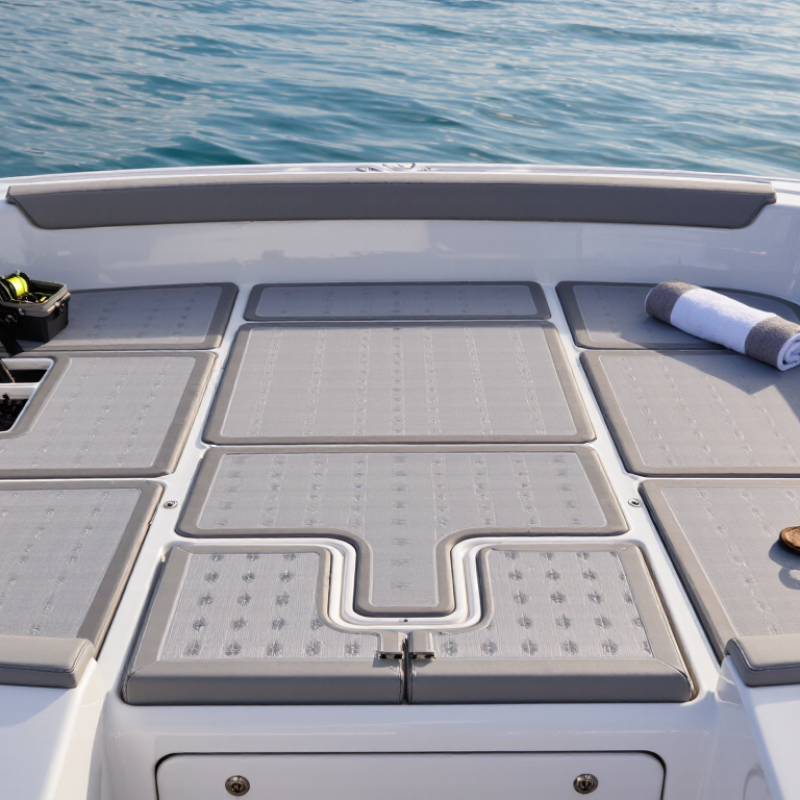
How to Choose EVA Deck Flooring for Your Boat?

Choosing the right Eva Deck Flooring can change how a boat feels underfoot, especially during long days on the water. A deck should look attractive, but appearance is only one part of the decision. Wet shoes, fishing equipment, sunscreen, salt spray, and hot sunlight can quickly expose weak materials. Good flooring should provide reliable traction without feeling harsh against bare feet. It should also resist water absorption, fading, and everyday stains.

The selection process begins with the boat’s layout and use. A fishing boat may need thicker, tougher foam around storage areas and casting platforms. A family runabout may benefit from softer cushioning and a cooler surface under bright sun. Measure every section carefully, including hatches, corners, and curved edges. Small errors become obvious after installation. Not every Eva Deck Flooring product performs equally well, even when the specifications appear similar. Check foam density, thickness, adhesive quality, surface texture, and color stability. A sample under direct sunlight can reveal more than a product photograph.

Installation experience matters too. The deck must be clean, dry, and free from wax or old residue. Poor preparation can cause lifting near the edges. That mistake is expensive. Manufacturers, marine flooring specialists, and experienced installers can provide useful guidance, but recommendations should match the boat’s real conditions. No flooring is perfect. Dark colors may absorb more heat, while deeply textured patterns can collect dirt. A careful choice balances comfort, durability, maintenance, safety, and budget. The best option is not always the most expensive one. It is the material that continues performing when the deck is wet, busy, and exposed.

How to Choose EVA Deck Flooring for Your Boat?

Define Your Boat’s Flooring Needs

Choosing EVA deck flooring starts with your boat’s actual flooring needs, not its appearance. Measure each walking area, including steps, hatches, swim platforms, and narrow side decks. Note water exposure, sunlight, fishing equipment, pets, and bare-foot traffic. A cockpit used for casting needs firm traction and easy cleaning. A family cruiser may need softer cushioning and lower heat absorption. Begin there.

The NMMA’s 2023 Recreational Boating Statistical Abstract recorded 11.6 million registered recreational boats in the United States. That scale reflects highly different deck conditions. EVA thickness, texture, density, and adhesive quality should match your boat’s surface and use. Closed-cell foam can resist water absorption, but it still needs correct drainage and careful edge sealing. Check the manufacturer’s technical data, not only product photographs. Small details matter.

The U.S. Coast Guard’s 2023 Recreational Boating Statistics reported 556 fatalities and 3,844 injuries. Deck traction cannot prevent every accident, but it can reduce slipping risks when installed correctly. Test samples with wet shoes before ordering large panels. Avoid placing seams where water pools or feet pivot sharply. A common mistake is choosing the thickest foam automatically. It may feel comfortable, yet interfere with hatch clearance. Recheck that point. A slightly imperfect fit is still a warning, not a design feature.

Compare EVA Foam Types, Thicknesses, and Surface Textures

Choosing EVA deck flooring starts with foam type, not color. Closed-cell EVA is the practical choice for boats because it limits water absorption and stays light. Cross-linked foam generally offers better dimensional stability than softer, low-density foam. ISO 845 defines apparent density testing, while ASTM D3575 covers key flexible cellular material tests. These standards matter because two sheets with identical thickness can feel completely different underfoot.

Thickness changes comfort, weight, and installation height. A 6 mm sheet suits clean, firm surfaces and low-clearance areas. An 8–10 mm sheet gives better cushioning around helm stations, swim platforms, and seating zones. Thicker foam can hide minor surface flaws, but it may compress unevenly. Surface texture also affects safety. Brushed or diamond patterns improve wet-foot grip, while deeper grooves drain water faster but collect sand. A smooth finish cleans easily, yet it can become slippery with sunscreen. The 2023 BoatUS Foundation safety guidance repeatedly emphasizes secure footing and uncluttered deck movement during onboard activities.

Tips: Test a sample with wet bare feet, soap residue, and common deck footwear. Press it for one minute, then check recovery. I would also inspect the adhesive area after heat exposure. This step is easy to skip. It should not be. A marine flooring report published by the National Marine Manufacturers Association notes that comfort and traction strongly influence perceived onboard quality, but those priorities can conflict. A very soft pad feels pleasant initially. It may show dents sooner. My own selection rule is simple: match density, thickness, and texture to traffic, exposure, and cleaning habits.

Measure the Deck and Plan the Flooring Layout

Choosing EVA deck flooring starts with accurate measurements, not color or texture. I measure each deck section at its longest and widest points. Curved edges need several measurements, taken every 10 to 15 centimeters. I record them on a simple sketch. Do not trust memory.

I also mark hatches, seat bases, drains, hinges, fuel fillers, and drainage channels. These parts must remain accessible after installation. A paper or cardboard template helps reveal irregular corners. For a narrow bow, I make separate templates instead of forcing one large piece. That small decision reduces waste.

Before ordering material, I divide the deck into practical panels. Long panels may look clean, but they can be difficult to position around steps and hardware. I plan seams along natural lines, such as seat edges or hatch gaps. Seams should not block water flow or create raised edges underfoot. I leave consistent clearance around removable fittings. The exact gap should follow the fitting requirements and flooring instructions.

I dry-fit every template on the deck. Then I check walking paths, opening directions, and panel alignment. It was tempting to center every shape, but the result looked awkward near the console. I adjusted the layout. Measure twice, cut once. Still, measurements can be wrong. Temperature, surface curvature, and template movement may affect the final fit. A careful second check catches expensive mistakes before adhesive is involved.

How to Choose EVA Deck Flooring for Your Boat?

Measure the Deck and Plan the Flooring Layout

Measure each deck section before ordering EVA flooring. The planning example below uses metric measurements and shows the estimated area for each section. Add approximately 10% extra material for trimming, seams, and fitting adjustments.

Planning result: The measured deck sections total approximately 17.46 m². With a 10% cutting allowance, plan for about 19.21 m² of EVA flooring.

Evaluate Installation Methods and Maintenance Requirements

Choosing EVA deck flooring for a boat requires more than matching colors or thickness. Installation affects comfort, safety, and long-term durability. Measure each deck section carefully, including curves, hatches, and drainage channels. A paper or digital template can prevent expensive cutting mistakes. It is easy to overlook a raised fitting.

Adhesive-backed EVA flooring offers a clean appearance and strong contact when installed correctly. The deck must be smooth, dry, grease-free, and free from old wax. Work in moderate temperatures, because extreme heat can soften the adhesive. Align each panel before removing the backing completely. Press firmly from the center outward, then seal attention around exposed edges. Some installers use removable fasteners for temporary layouts or frequently accessed panels. This option simplifies replacement, but movement may occur under heavy foot traffic. I would test one small area first. It can reveal problems early.

Maintenance remains simple, but it should be consistent. Rinse the surface with fresh water after saltwater use. Remove sand before scrubbing, since trapped grit can wear the texture. Use mild soap and a soft brush for stains. Avoid harsh solvents, fuel-based cleaners, and abrasive pads. Inspect corners and seams every few months. If an edge begins lifting, clean beneath it and repair it promptly. Waiting usually makes the damage larger. EVA flooring can dry slowly beneath stored gear, so lift cushions and equipment regularly. That small habit is often missed.

How to Choose EVA Deck Flooring for Your Boat? – Evaluate Installation Methods and Maintenance Requirements
Evaluation Category EVA Flooring Option Suitability Practical Considerations
Installation Method Comparison
Installation Method Pressure-Sensitive Adhesive Backing High
  • Fast installation because the adhesive is already applied to the sheet or mat.
  • Requires a clean, dry, smooth, and grease-free surface.
  • Best suited to flat or gently curved deck areas with good surface preparation.
  • Alignment must be accurate because repositioning becomes difficult after firm contact.
Installation Method Marine-Grade Contact or Two-Part Adhesive High
  • Provides strong, continuous bonding when correctly applied.
  • Useful for larger panels, high-traffic areas, and surfaces exposed to repeated moisture.
  • Requires careful mixing or application, ventilation, and compliance with the adhesive manufacturer’s curing time.
  • Removal is more difficult and may require scraping or controlled heat.
Installation Method Interlocking or Loose-Lay EVA Tiles Medium
  • Can be installed without permanent adhesive and removed for cleaning or storage.
  • Suitable for temporary layouts, cockpit areas, and relatively protected surfaces.
  • May shift, lift at the edges, or allow water and grit beneath the tiles if not tightly fitted.
  • Less suitable for high-speed operation or areas with strong wind exposure unless mechanically secured.
Surface Preparation Bare Fiberglass or Painted Deck High
  • Remove wax, oil, dirt, loose paint, and oxidation before installation.
  • Repair cracks, deep scratches, and uneven areas so the EVA foam does not telegraph surface defects.
  • Light abrasion may improve adhesion, but the surface must be cleaned afterward to remove dust.
  • Do not install over uncured coatings or visibly damp surfaces.
Surface Preparation Aluminum or Metal Deck Medium
  • Remove corrosion and contaminants before bonding.
  • Metal can heat up significantly in direct sunlight, so adhesive compatibility and temperature limits should be checked.
  • Use a suitable primer only when specified for the selected adhesive and deck coating.
Material Selection Factors
Traction Textured or Brushed EVA Surface High
  • Improves underfoot grip compared with a smooth foam surface, especially when the deck is damp.
  • Texture should be selected according to comfort, barefoot use, fishing activity, and cleaning frequency.
  • No deck covering can eliminate all slip risk when oil, algae, or heavy contamination is present.
Thickness Approximately 5–6 mm EVA Foam High
  • Offers a practical balance of cushioning, weight, comfort, and clearance for many recreational boats.
  • Thicker foam can improve comfort but may interfere with hatches, drains, locker lids, or hardware clearances.
  • Confirm the available clearance before ordering or templating.
Thickness Approximately 8–10 mm EVA Foam Medium
  • Provides additional cushioning for seating and standing areas.
  • Has a greater risk of interfering with moving parts and may require more precise edge and corner fitting.
  • Should be avoided where water drainage or hatch operation depends on minimal floor height.
Color and Heat Light or Medium-Tone EVA High
  • Generally absorbs less solar heat than very dark colors.
  • May make sand, fish residue, mud, and other visible contamination easier to notice.
  • Color choice should balance comfort, cleaning expectations, and the boat’s existing finish.
Color and Heat Dark EVA with a Textured Top Layer Medium
  • Can coordinate well with many boat interiors and may visually conceal some dirt.
  • Dark surfaces typically become hotter under direct sunlight than lighter surfaces.
  • Heat exposure can increase user discomfort and may accelerate surface aging in harsh conditions.
Maintenance Requirements
Routine Cleaning Fresh Water and Mild Detergent Recommended
  • Rinse loose salt, sand, and grit with fresh water after boating.
  • Use a mild, pH-neutral or manufacturer-approved detergent with a soft or medium-soft brush.
  • Rinse thoroughly so detergent residue does not create a slippery film.
  • Allow the surface and edges to dry before covering the boat.
Stain Removal Prompt Spot Cleaning Recommended
  • Clean sunscreen, fuel splashes, food, fish residue, and bird droppings as soon as practical.
  • Blot or lift contaminants rather than aggressively grinding them into the foam texture.
  • Test any cleaning solution on an inconspicuous area before treating the entire deck.
Chemical Compatibility Avoid Solvents and Harsh Cleaners Important
  • Do not routinely use acetone, strong solvents, abrasive powders, or aggressive degreasers on EVA foam.
  • These products can discolor, soften, dry out, or damage the foam and its adhesive layer.
  • For fuel or oil contamination, follow the flooring and cleaning-product instructions and rinse promptly.
Mold and Mildew Prevention Drying and Ventilation Recommended
  • Remove standing water and improve ventilation beneath covers.
  • Clean organic residue regularly because trapped moisture and dirt can support mildew growth.
  • Lift removable tiles periodically to inspect the deck and allow both surfaces to dry.
Edge and Adhesive Inspection Monthly Visual Check Recommended
  • Inspect seams, corners, edges, hatch openings, and high-traffic zones for lifting or separation.
  • Repair small edge failures early to prevent water, grit, and dirt from spreading beneath the flooring.
  • Do not cover loose adhesive failure without first identifying and correcting the cause.
Pressure Washing Low-Pressure, Controlled Use Use Carefully
  • High-pressure water can lift edges, damage the foam texture, or force water into seams.
  • If used, keep the nozzle at a safe distance, use moderate pressure, and avoid directing the jet at edges or joints.
  • Manual brushing is generally safer for routine maintenance.
Decision Guide
Best Choice for Permanent Coverage Custom-Cut EVA Panels with Full Adhesive Preferred Choose this configuration when the boat requires a stable, integrated deck surface, the deck is properly prepared, and long-term placement is more important than easy removal.
Best Choice for Removable Coverage Interlocking or Loose-Lay Tiles Conditional Choose this configuration when access to the original deck, seasonal removal, or frequent underside cleaning is important and the installation area is protected from movement.
Best Choice for Easy Installation Pre-Cut Self-Adhesive Mats Preferred Choose this configuration for smaller, relatively flat areas when the deck can be thoroughly cleaned, dried, and accurately measured before installation.
Lowest Maintenance Approach Textured EVA with Sealed Edges and Regular Rinsing Preferred A textured surface, accurate fitting, secure bonding, prompt stain removal, fresh-water rinsing, and adequate drying generally reduce cleaning effort and help extend service life.
Practical note: Actual service life depends on UV exposure, foot traffic, deck preparation, adhesive quality, temperature, chemical exposure, and cleaning habits. Always verify temperature, curing, chemical-resistance, and surface-preparation requirements in the installation instructions supplied with the selected EVA flooring system.

Balance Safety, Comfort, Durability, and Cost

How to Choose EVA Deck Flooring for Your Boat?

Balance Safety, Comfort, Durability, and Cost

Choosing EVA deck flooring starts with safety, not color. Wet decks become slippery quickly, especially near swim platforms and boarding areas. Look for a textured, closed-cell surface that improves grip and does not absorb water. Check how it feels under bare feet. A sharp texture may improve traction but cause discomfort during long trips.

Comfort also depends on thickness and density. Thicker EVA can soften knees and reduce fatigue while fishing or moving around the cockpit. However, very soft foam may dent under coolers, seats, or heavy equipment. Measure high-traffic areas before ordering. I once underestimated this point and had to replace a narrow strip near the helm.

Durability depends on sunlight, saltwater, cleaning habits, and installation quality. Select material with reliable UV resistance and strong marine adhesive compatibility. The deck must be clean, dry, and free from wax before installation. Rounded edges usually resist lifting better than sharp corners. Do not ignore maintenance. Rinse away salt regularly and avoid harsh solvents that can damage the surface.

Cost requires a practical comparison. Cheap flooring may fade, compress, or peel sooner, increasing replacement labor. Premium thickness is not always necessary in every area. A balanced layout can use more cushioning near seating and tougher, thinner flooring elsewhere. Recheck the template carefully. Small measuring errors become expensive when material is custom cut.