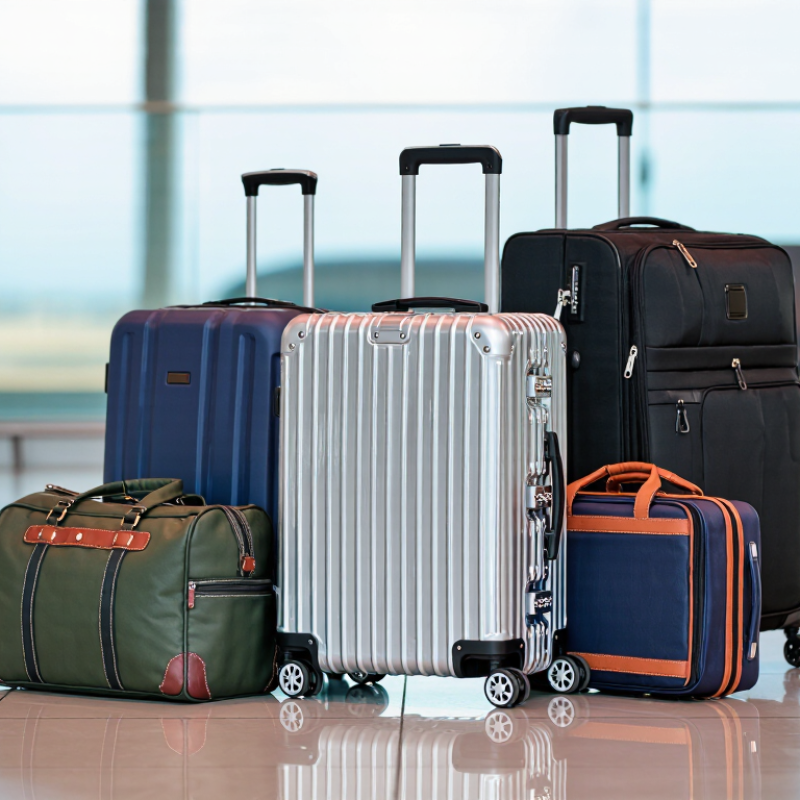
Choosing a luggage manufacturer in 2026 requires more than comparing glossy catalogs and low prices. Global buyers need evidence of factory experience, material consistency, product testing, and dependable communication. A suitcase may look impressive under showroom lights. Its real character appears after conveyor-belt impacts, wet platforms, uneven pavements, and repeated wheel rotations.
Ramesh Tainwala, former CEO of Samsonite International, once observed, “A bag is not just a product; it is a travel companion.” That idea still matters. The strongest manufacturers understand how travelers actually use luggage, from crowded airport terminals to long-distance business trips. They improve handles, zippers, shells, wheels, linings, and internal frames through practical testing.
This guide examines leading luggage manufacturers for international buyers in 2026. It considers production capability, customization, quality-control procedures, sustainability efforts, and service after delivery. Certifications can help. They do not tell the whole story. Buyers should still request samples, inspect stitching, test telescopic handles, and review product documentation carefully.
Some rankings remain debatable. No factory performs perfectly across every category. A premium specialist may lack mass-production capacity, while a large supplier may offer less flexible customization. That difference deserves attention. We focus on manufacturers with credible experience, transparent processes, and products suited to changing travel demands. The final choice should reflect your market, budget, sales channel, and risk tolerance—not marketing language alone.
A leading luggage manufacturer in 2026 must offer more than attractive samples and competitive pricing. Global buyers need evidence of consistent production, reliable materials, and practical quality control. Experience matters when a factory has handled different climates, transport conditions, and customer requirements. A suitcase that performs well in a showroom may fail after repeated airport handling.
Professional manufacturers test wheels, telescopic handles, zippers, seams, and shell impact resistance. They record test results instead of relying on verbal promises. Factory teams should explain material choices clearly, including recycled fabrics, polycarbonate blends, aluminum components, and protective coatings. Small details matter. A handle should retract smoothly, even when the case is fully packed.
Reliable suppliers also maintain traceable production records. Buyers should be able to review inspection procedures, sample approvals, defect rates, and corrective actions. Clear communication is equally important during design changes or shipment delays. In my experience, rushed revisions often create hidden weaknesses. I have seen neat prototypes become inconsistent during mass production. That gap deserves honest attention.
Responsible manufacturing includes worker safety, waste control, ethical sourcing, and compliance with destination-market requirements. Documentation should be current and verifiable, not prepared only for a sales presentation. A strong partner can discuss limitations without avoiding difficult questions. Not every factory will meet every order size or delivery schedule. That is acceptable. Accurate promises are more valuable than impressive claims that later disappoint.
Global buyers comparing luggage suppliers should look beyond catalog photos and quoted prices. A reliable supplier shows consistent sampling, clear specifications, and evidence from real production runs. Ask for shell thickness, wheel material, handle cycles, zipper grade, lining composition, and tested load limits. Details matter.
Factory experience is visible in the sample room. Inspect corner alignment, stitching density, seam strength, and wheel movement on uneven flooring. Request a pre-production sample before approving bulk work. Independent testing can verify abrasion resistance, drop performance, odor limits, and travel durability. Audit production capacity, worker training, equipment maintenance, and corrective-action records. A polished audit report is not enough. Visit when possible.
Compare minimum order quantities, lead times, packaging choices, payment terms, and after-sales procedures. Suppliers should explain how they manage defects, replacement parts, and shipment changes. Check whether materials and labeling can meet destination-market requirements. Claims about recycled content need supporting documents, not attractive wording. I have seen strong prototypes weaken during rushed production. That risk deserves a measurable inspection plan, not optimism. No scorecard is perfect. Weight quality higher than the lowest bid, but review costs honestly. A supplier may offer excellent construction yet struggle with communication across time zones. Trial orders reveal that weakness early.
This 100-point buyer framework prioritizes product quality, compliance, production capability, cost competitiveness, delivery reliability, and customization. Buyers can use these weighted criteria to compare luggage suppliers consistently without relying only on price.
Reliable luggage manufacturers now compete through practical product strengths, not attractive shells alone. Experienced factories typically offer multiple construction options, including polycarbonate cases, aluminum frames, soft-sided polyester, and recycled fabrics. Each material serves a different travel pattern. Polycarbonate resists impact well, while soft luggage often provides better storage flexibility. Strong manufacturers also control stitching, corner protection, wheel alignment, and zipper quality through documented inspections.
Product testing should reflect real travel conditions. A useful evaluation includes wheel rolling on uneven floors, handle extension cycles, zipper pulling, and drop tests with weighted interiors. Some manufacturers provide detailed inspection records and sample approvals. That improves buyer confidence. Still, factory claims deserve verification. I have seen impressive samples hide weak wheel attachments or inconsistent lining quality. One overlooked detail can increase returns.
Tips:
Ask for production samples before placing large orders. Check wheel noise, handle looseness, seam strength, and interior odor. Request material specifications, packaging details, and inspection procedures. Confirm whether the factory can maintain the same quality across different colors and sizes. Smaller factories may offer flexible customization, while larger facilities often provide stronger capacity and process consistency. Neither option is automatically better. The right choice depends on order volume, target price, delivery schedule, and required durability.
In 2026, luggage sourcing depends on regional strengths, not factory size alone. China remains strong in molded ABS and polycarbonate cases, aluminum frames, wheels, and automated assembly. Its mature supplier networks support large orders for North America, Europe, the Middle East, and Latin America. Experienced buyers often request pilot production before confirming annual volumes. A factory may promise speed, yet sample approval can reveal weak wheel mounts or uneven shell lines.
Vietnam and Cambodia offer growing cut-and-sew capacity for soft luggage, backpacks, and travel accessories. Their export networks increasingly serve North American, European, and Asian markets. India provides advantages in textile luggage, leather alternatives, and labor-intensive finishing. However, output consistency can differ between production lines. That assumption fails. Buyers should inspect stitching density, handle alignment, fabric abrasion results, and carton strength.
Turkey supports shorter delivery routes into Europe, North Africa, and nearby markets. Mexico can reduce transit distance for buyers serving North America, especially when regional replenishment matters. Eastern European facilities may offer flexible runs, but their capacity is often narrower than expected. I have found that realistic planning requires factory visits, third-party testing, and clear packaging specifications. Product samples are not enough. Ask for material records, production photos, quality checkpoints, and recent export references. Shipping performance also deserves attention; a good suitcase arriving late can still damage a seasonal sales plan.
| Manufacturing Region | Primary Production Strengths | Common Materials and Components | Typical Product Positioning | Key Export Markets | Logistics Advantages | Typical MOQ Guidance | Indicative OEM Lead Time | Best Fit for Global Buyers |
|---|---|---|---|---|---|---|---|---|
| Mainland China Guangdong, Zhejiang, Jiangsu and Fujian | Large-scale production of hard-shell cases, soft luggage, business cases, backpacks and travel accessories; strong tooling, assembly and packaging ecosystems. | Polycarbonate, ABS, polypropylene, polyester, nylon, aluminum frames, zinc-alloy hardware, telescopic handles and spinner wheels. | Value, mid-market and premium private-label programs with broad customization options. | North America, Western Europe, Central and Eastern Europe, the Middle East, Southeast Asia, Australia and Latin America. | Dense supplier networks, extensive ocean-port coverage and established export documentation capability. | Usually 300–1,000 units per color or style | 45–75 days after sample and material approval | Buyers seeking wide product choice, competitive pricing and integrated sourcing. |
| Vietnam Ho Chi Minh City, Binh Duong and nearby industrial zones | Strong sewn-luggage, travel-bag, backpack and soft-case production; increasing capability in molded and assembled components. | Polyester, recycled polyester, nylon, coated fabrics, EVA, webbing, molded panels and metal or plastic fittings. | Mid-market soft luggage, backpacks, lifestyle travel goods and sustainability-focused collections. | United States, European Union, Japan, South Korea, Australia and other Asia-Pacific markets. | Major container ports, established cut-and-sew workforce and regional trade-agreement coverage. | Usually 500–1,500 units per style | 50–80 days after approval | Brands diversifying Asian sourcing or prioritizing sewn products and recycled fabrics. |
| India Delhi NCR, Mumbai, Chennai and Bengaluru clusters | Soft luggage, backpacks, duffel bags, school and work bags, leather goods and selected hard-case assembly. | Polyester, nylon, cotton canvas, leather, synthetic leather, EVA, polypropylene and recycled fabrics. | Value-to-mid-market products, institutional orders and material-led collections. | United States, United Kingdom, European Union, the Middle East, Australia and South Asia. | Large domestic textile and leather base; access to major west- and east-coast container gateways. | Usually 500–2,000 units per style | 60–90 days after approval | Buyers requiring textile flexibility, leather expertise or diversified sourcing. |
| Bangladesh Dhaka, Gazipur and Chattogram manufacturing areas | High-volume cut-and-sew production for backpacks, duffel bags, school bags and soft travel luggage. | Polyester, nylon, cotton blends, coated fabrics, recycled yarns, webbing, zippers and foam padding. | Cost-sensitive mass-market and promotional travel products. | European Union, United Kingdom, North America, Australia and regional Asian markets. | Strong apparel and sewn-goods labor base; Chattogram provides the principal seaport connection. | Usually 1,000–3,000 units per style | 60–100 days after approval | Large orders where sewn construction and price competitiveness are priorities. |
| Indonesia West Java, Central Java and Jakarta-area factories | Backpacks, soft luggage, outdoor bags, duffels and selected molded or semi-structured travel products. | Polyester, nylon, canvas, EVA, polyurethane-coated textiles, recycled fabrics and molded plastics. | Mid-market travel, outdoor and lifestyle luggage. | United States, European Union, Japan, South Korea, Australia and Southeast Asia. | Established footwear, apparel and bag manufacturing base with access to major regional ports. | Usually 500–1,500 units per style | 55–90 days after approval | Buyers sourcing durable sewn products and outdoor-oriented designs. |
| Cambodia Phnom Penh and surrounding special economic zones | Cut-and-sew backpacks, duffels, soft luggage and travel accessories, often within export-oriented factories. | Polyester, nylon, canvas, recycled textiles, foam, webbing and standard hardware. | Value and mid-market soft goods, promotional and institutional programs. | European Union, United States, Canada, Japan, South Korea and Australia. | Special economic zones, export-oriented workforce and proximity to Southeast Asian supply networks. | Usually 1,000–3,000 units per style | 60–100 days after approval | High-volume soft-luggage programs with relatively simple construction. |
| Turkey Istanbul, Bursa and western industrial regions | Soft luggage, leather travel goods, backpacks, business bags and short-run fashion-oriented production. | Polyester, nylon, cotton, leather, synthetic leather, polyurethane coatings and metal hardware. | Mid-market, premium and design-led collections. | European Union, United Kingdom, the Middle East, North Africa and Central Asia. | Shorter road and sea routes to Europe; proximity supports replenishment and smaller seasonal orders. | Usually 100–500 units per style | 30–60 days after approval | European buyers needing shorter lead times, smaller batches or fashion responsiveness. |
| Italy Lombardy, Veneto, Tuscany and Marche | Premium leather luggage, business cases, structured travel goods and design-focused small-batch manufacturing. | Full-grain leather, coated canvas, technical textiles, aluminum or metal fittings and precision hardware. | Premium and luxury private-label production with emphasis on design and finishing. | European Union, Switzerland, the United Kingdom, North America, the Middle East and East Asia. | Close access to European customers, established leather districts and strong prototyping capabilities. | Often 50–300 units per style | 45–90 days after approval | Premium buyers prioritizing craftsmanship, materials and brand positioning. |
| Portugal North and central manufacturing regions | Leather goods, soft travel bags, backpacks and small-batch textile luggage with strong finishing capability. | Leather, cotton canvas, recycled polyester, nylon, cork-based materials and metal hardware. | Premium, sustainable and design-led European collections. | European Union, United Kingdom, North America and selected Asian markets. | Integrated European supply chains, relatively short delivery distances and flexible small-batch production. | Often 50–300 units per style | 40–80 days after approval | Buyers seeking European production, traceability and limited-volume launches. |
| Mexico Central and northern industrial zones | Soft luggage, backpacks, work bags and selected hard-case assembly for North American supply chains. | Polyester, nylon, polypropylene, ABS, EVA, molded components and standard hardware. | Value-to-mid-market products and regional replenishment programs. | United States, Canada, Latin America and selected Caribbean markets. | Land-border access to the United States, shorter regional transit and proximity to North American distribution centers. | Usually 500–2,000 units per style | 30–70 days after approval | North American buyers seeking regional supply and reduced ocean-transit exposure. |
| Brazil São Paulo, Paraná and southern industrial areas | Soft luggage, backpacks, school bags and travel accessories for the domestic and Latin American markets. | Polyester, nylon, synthetic leather, polypropylene, ABS, EVA and local textile inputs. | Value and mid-market products tailored to regional demand. | Brazil, Argentina, Chile, Colombia, Peru, Uruguay and other Latin American markets. | Large domestic consumer market and regional distribution potential; export transit varies by destination. | Usually 500–2,000 units per style | 50–90 days after approval | Buyers targeting Brazil or broader Latin American distribution. |

Buyer note: Production quantities and lead times are indicative planning ranges for OEM and private-label programs, not official industry standards. Actual results depend on product complexity, material availability, testing requirements, order volume, seasonal capacity and destination-market compliance.
Choosing a luggage manufacturer requires more than comparing unit prices. A reliable partner should show consistent production, clear communication, and practical export experience. Request factory photos, production records, and recent quality reports. Then verify them through an independent audit when possible.
Samples reveal reality. Test zippers, wheels, handles, stitching, and fabric after repeated use. A polished sample may hide weak internal construction. Ask whether the factory can maintain the same quality during mass production.
Review minimum order quantities, lead times, packaging details, and replacement procedures in writing. Small gaps here can become expensive delays.
Capability matters beyond equipment. The right supplier understands your target market, packaging needs, product documentation, and applicable safety requirements. Ask how materials are sourced and how production waste is managed. Evidence is stronger than promises. Review their inspection process at incoming, in-process, and final stages. A partner should also explain how it handles design changes without confusion.
Price still matters, but landed cost matters more. Include freight, packaging, inspection, defects, and possible rework. Communication is another test. Send a detailed inquiry and measure the response. Is it specific, timely, and honest about limitations? No supplier is perfect. We have seen attractive factories fail because they accepted every request too quickly. A dependable partner admits constraints, proposes workable alternatives, and improves through documented feedback.